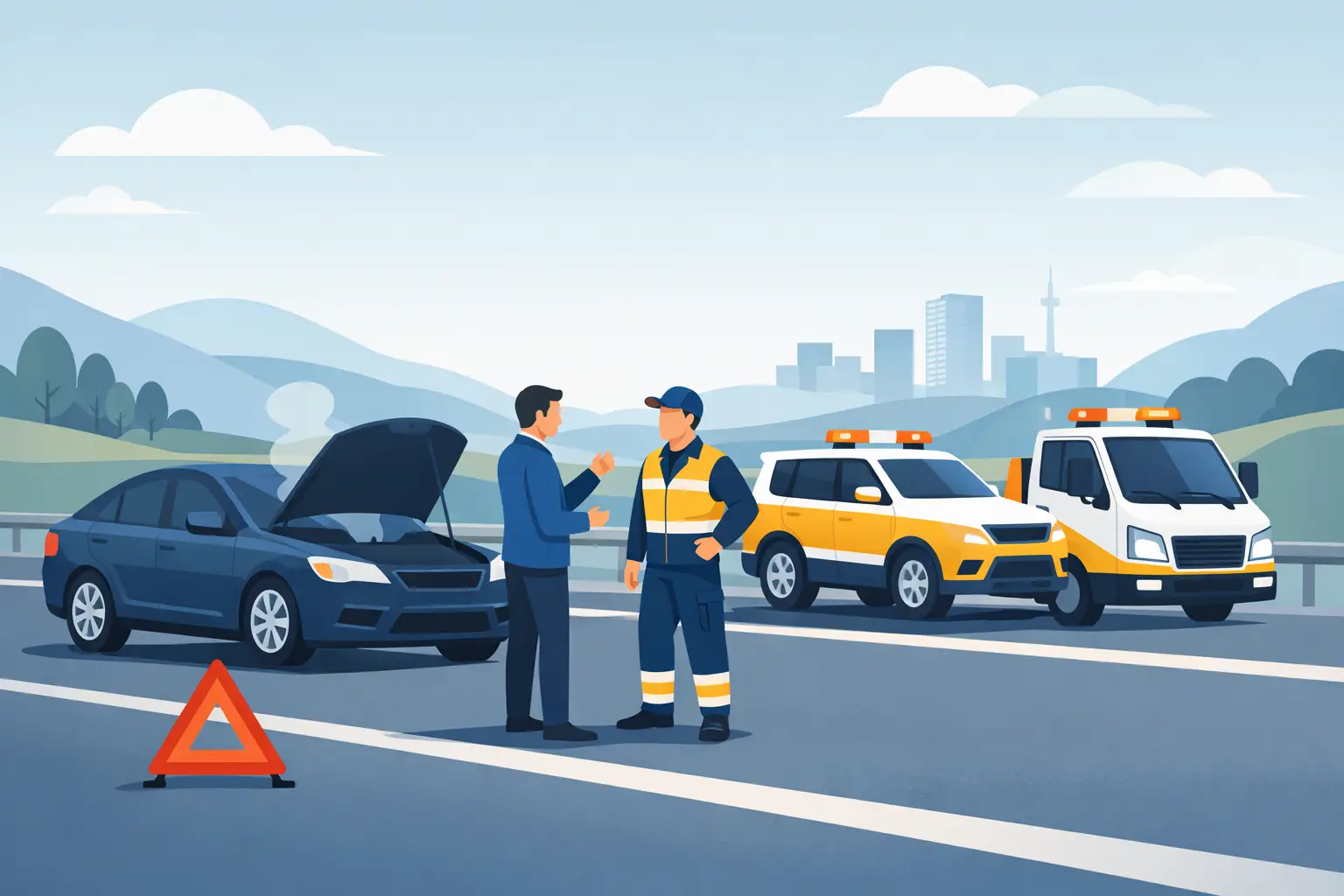
A breakdown rarely happens at a convenient time. It happens on the way to work, late at night on a motorway, or halfway through a long-distance trip with a vehicle you do not want handled carelessly. That is usually when people ask: which is the best roadside recovery service?
The honest answer is that the best service is not always the cheapest, the biggest, or the one with the loudest advertising. It is the provider that can respond quickly, manage the situation properly, and transport your vehicle safely from roadside to destination without adding stress or risk.
Which is the best roadside recovery service for your needs?
For some motorists, the answer is a national membership company with broad UK coverage and standard roadside assistance. For others, especially owners of prestige, performance, classic, or specialist vehicles, the better option is a professional recovery and transport provider that offers direct response, careful loading, secure onward movement, and storage if required.
That distinction matters. A basic roadside service may be fine for a common daily driver with a flat battery or puncture. It may not be the right fit if your vehicle has low ground clearance, specialist bodywork, accident damage, or a value that makes careless handling expensive very quickly.
So rather than asking which brand is biggest, it makes more sense to ask which provider is best equipped for your specific situation.
What actually makes a roadside recovery service the best?
Response time is the first test. When your vehicle is stranded, you need clear communication, realistic arrival estimates, and a team that can act without delay. A service that answers quickly but cannot allocate the right vehicle or operator is not solving much.
The second test is capability. Not every recovery job is a simple tow. Some vehicles need specialist loading equipment. Some require winching in confined spaces. Accident recovery often calls for a more controlled approach, especially where steering, suspension, or body panels are damaged. If the provider cannot handle those conditions properly, the job becomes a risk rather than a rescue.
Vehicle care is where the gap widens. Standard towing may be enough for a van with a mechanical issue. It is not the same as transporting a prestige saloon, performance car, collector vehicle, or dealer stock. The best roadside recovery service should understand approach angles, wheel security, low-clearance loading, and the importance of avoiding preventable damage during recovery.
Coverage also matters, but it should be looked at properly. National coverage sounds reassuring, yet the practical question is whether the provider can actually support your route, your location, and your required destination. If you need transport across the UK or into Europe, broad operational reach matters more than a logo on a membership card.
The difference between roadside assistance and vehicle recovery
A lot of confusion comes from treating roadside assistance and vehicle recovery as the same thing. They are related, but they are not identical.
Roadside assistance usually means an attempt to fix the problem where the vehicle has stopped. That could be a jump start, battery replacement, tyre support, or a simple mechanical check. If the issue can be resolved safely at the roadside, that is often the quickest outcome.
Vehicle recovery begins when the car cannot continue. At that point, what matters is getting it moved safely to a garage, home address, dealership, bodyshop, or secure storage site. This is where equipment, loading skill, route planning, and transport standards become the priority.
If your concern is not just getting moving again, but protecting the vehicle from further damage, then recovery quality matters more than roadside convenience.
Which is the best roadside recovery service for prestige vehicles?
For prestige vehicles, the best service is usually not the most generic one. It is the one that treats the job as specialist transport, not just vehicle removal.
Prestige and performance cars present different recovery challenges. Low front splitters, wide alloys, delicate bodywork, modified suspension, and limited ground clearance all increase the chance of damage if the operator takes a one-size-fits-all approach. The right service should know how to assess the vehicle before loading, choose the correct method, and secure it without causing avoidable wear or impact.
There is also the question of what happens next. If the vehicle cannot go straight to a repairer or destination, secure short-term storage becomes part of the service. That is especially relevant after accidents, insurer delays, or out-of-hours incidents. A recovery provider that can combine roadside collection with controlled onward logistics is often the better choice for high-value vehicles.
That is why many owners, collectors, dealerships, and garages prefer a specialist operator over a broad membership model when the vehicle itself demands more careful handling.
Price matters, but not in the way most people think
Cost is always part of the decision, and rightly so. But roadside recovery should be judged on total value, not headline price.
A lower-cost service can become expensive if it involves a long wait, poor communication, limited destination options, or damage during loading and transport. The same applies if you end up arranging separate storage, a second transport provider, or additional recovery because the first response was not suitable.
Paying for a capable operator can reduce those risks. That does not mean the most expensive provider is automatically the best. It means the best provider is the one that can complete the whole job properly, from first call to final drop-off, with the right level of care.
In urgent situations, certainty is often worth more than a small saving.
Signs you are choosing the right provider
A good recovery service is usually easy to recognise once you know what to look for. They give direct answers, not vague promises. They explain whether they can attend, how they will move the vehicle, and what the next step will be if roadside repair is not possible.
They also ask sensible questions. Vehicle type, condition, location, destination, accident status, and any access issues all affect how the job should be handled. A provider that does not ask much may not be planning much either.
For specialist or higher-value vehicles, reassurance should come from capability rather than marketing language. You want to know the vehicle will be loaded correctly, transported securely, and delivered where it needs to go without unnecessary handling. That level of control is what separates a dependable recovery partner from a basic towing response.
When a specialist recovery provider is the better option
There are situations where a specialist provider is clearly the right choice. If the vehicle has been in an accident, if it is non-running, if it is high value, or if it needs moving over a longer distance, the job goes beyond basic roadside support.
The same applies when timing is critical. Dealership transfers, urgent workshop delivery, event transport, or cross-country relocation all require more than a simple lift off the roadside. You need a provider that can treat recovery as part of a wider logistics service.
This is where a company such as MHJ Prestige Transport fits naturally. The combination of 24/7 recovery, prestige vehicle handling, UK and European coverage, and secure storage support makes sense for motorists and businesses that need more than a standard tow.
The best roadside recovery service depends on the vehicle and the situation
If you drive a standard car locally and want broad membership cover, a national breakdown scheme may suit you well. If you own a prestige vehicle, manage dealer stock, handle insurance cases, or need controlled transport after a breakdown or collision, a specialist recovery operator is often the stronger choice.
That is the key point. The best roadside recovery service is not universal. It depends on response speed, vehicle type, journey requirements, and how much care the situation demands.
When the moment comes, most people do not want a long list of options. They want a provider that answers, arrives, and handles the vehicle properly. That is usually the right standard to judge by.
If you are choosing before you need help, look past brand size and ask a simpler question: who would you trust to load your vehicle in the rain, at night, under pressure, and get it safely where it needs to be? Start there, and the right choice becomes much clearer.