
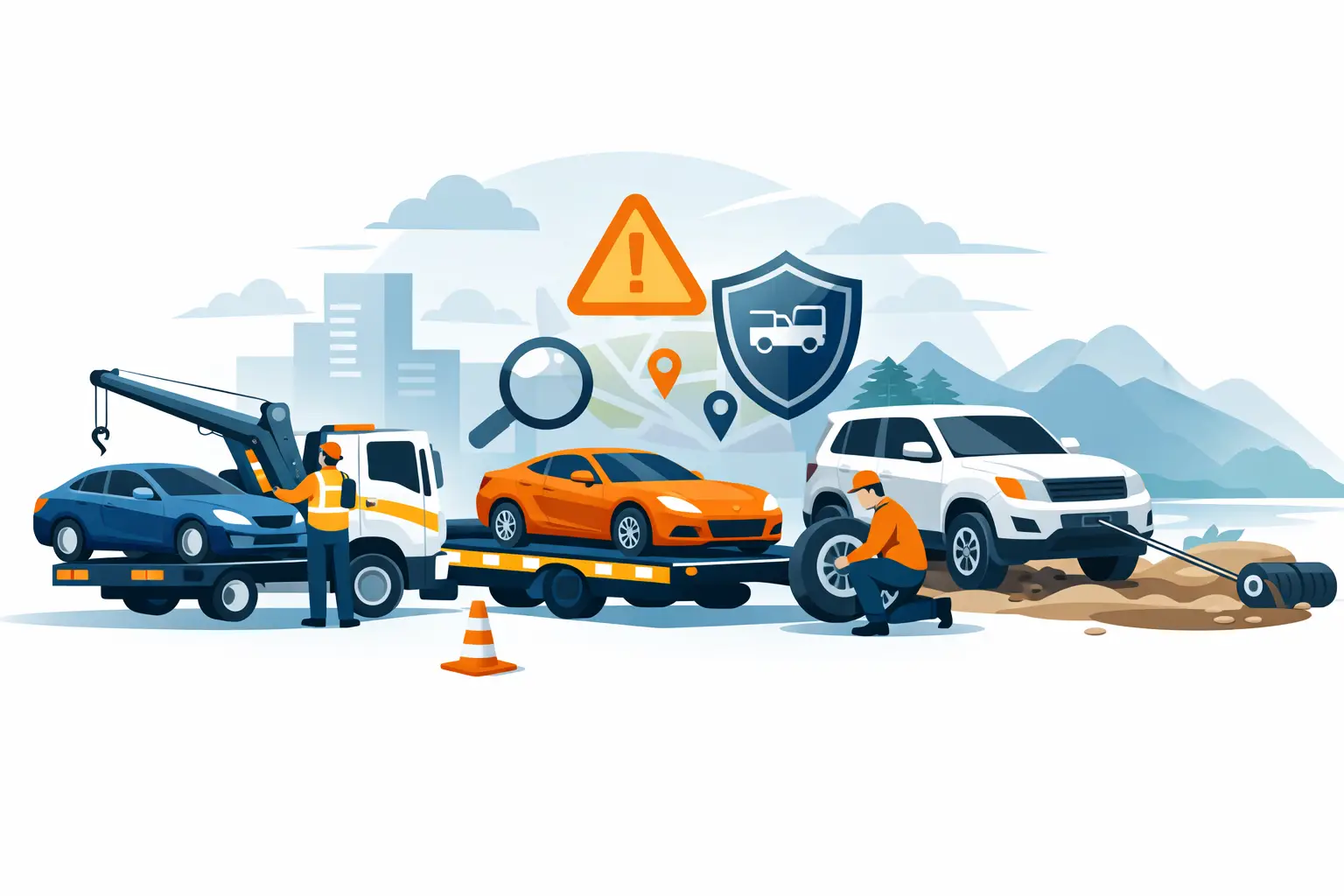
A vehicle stops where it stops. That might be on a motorway hard shoulder, outside your home, at a bodyshop, or halfway through a European journey with a prestige car that cannot be left to chance. When people ask what does vehicle recovery include, they are usually trying to answer a practical question fast - who can get the vehicle moved safely, where can it go, and what happens next?
The short answer is that vehicle recovery usually includes the safe collection, loading, transport, and delivery of a disabled, damaged, or non-running vehicle. In many cases, it can also include roadside assistance, accident recovery, secure storage, onward delivery to a garage or home address, and specialist handling for higher-value vehicles. The exact scope depends on the situation, the type of vehicle, and the provider you call.
What does vehicle recovery include in practice?
In practice, vehicle recovery is more than towing a car away. A proper recovery service is built around getting a stranded or immobile vehicle from one location to another without causing further damage, delay, or confusion.
That usually starts with a callout. The operator takes the location, vehicle details, condition of the vehicle, and destination requirements. If the vehicle has broken down, the response may include an attempt at roadside assistance if the fault is minor and safe to deal with on site. If the vehicle cannot be repaired where it is, the next step is recovery transport.
Recovery transport includes attending the location with the right equipment, loading the vehicle correctly, securing it for transit, and delivering it to the agreed destination. That might be a local garage, a main dealer, a specialist workshop, a home address, an insurance-approved repairer, or secure storage.
If the vehicle has been involved in an accident, the service may also include recovery from the roadside or scene of collision, coordination with repairers or insurers, and temporary holding while next steps are arranged. That is especially useful when the vehicle cannot be assessed or repaired immediately.
Roadside assistance versus full vehicle recovery
People often use these terms interchangeably, but they are not exactly the same. Roadside assistance is about trying to get the vehicle moving again where it has stopped. Vehicle recovery is about moving it when that is not possible, not safe, or not sensible.
For example, a flat battery, minor electrical issue, or simple wheel problem may be resolved on site. A gearbox failure, accident damage, engine fault, suspension issue, or wheel loss is a different matter. In those cases, the safer option is usually transport rather than a temporary fix.
This distinction matters because not every provider offers both to the same standard. Some mainly provide basic towing. Others, particularly specialist operators, are set up to handle a wider range of incidents and vehicle types with more care and control.
What is typically covered by a recovery service?
Most recovery jobs include a core set of services. First is collection from the breakdown or incident location. Second is safe loading using equipment suited to the vehicle’s condition. Third is transport to the chosen destination. Fourth is controlled unloading at the end point.
Beyond that, there are several services that may be included depending on the provider and the job. These often include accident recovery, non-runner transport, winching a vehicle from an awkward position, moving vehicles with damaged wheels or suspension, and arranging temporary secure storage.
For customers with prestige, performance, classic, or specialist vehicles, careful handling becomes part of the service rather than an optional extra. Low-clearance vehicles, valuable paintwork, non-standard body styling, and sensitive drivetrains all require more attention during loading and transport. That is where a specialist operator adds value. The job is not simply to move the car, but to move it correctly.
Accident recovery and post-accident transport
Accident recovery is one of the clearest examples of why vehicle recovery can involve more than a tow from A to B. A collision can leave a vehicle undriveable, unsafe, or legally unable to continue its journey. It may also leave it in a vulnerable location where quick removal is important.
In that situation, recovery includes making the vehicle safe to move, loading it without worsening the damage, and delivering it to the right place. That may be a repair centre, insurance facility, storage site, or another secure location while the next decision is made.
Timing matters here. So does communication. Drivers, owners, dealerships, garages, and insurers often need a recovery partner that can respond quickly and handle the logistics without repeated handovers. A calm, controlled recovery service reduces disruption at the point when people are least interested in complications.
Does vehicle recovery include long-distance transport?
It can, and often should. Many people assume recovery only covers a short local journey to the nearest garage. That is sometimes enough, but not always the best option.
If you break down far from home, own a specialist vehicle, or need to get the car to a trusted repairer rather than the closest one, long-distance recovery may be the more practical route. The same applies to dealership transfers, collector vehicle movements, and post-accident transport where the vehicle needs to reach a specific destination.
For UK-wide and European vehicle movements, the service moves beyond basic roadside removal and into automotive logistics. That includes route planning, timing, careful loading, and dependable delivery. For valuable vehicles, this wider capability is often what customers are really buying - not just a recovery, but a controlled transport solution.
Secure storage can be part of vehicle recovery
Not every vehicle can go straight to a garage or home address. Sometimes a workshop cannot accept it immediately. Sometimes an insurer has not yet confirmed instructions. Sometimes the owner needs time to decide what happens next.
That is where secure vehicle storage becomes part of the recovery process. The vehicle is collected, transported, and held safely until onward movement is arranged. This is particularly useful after an accident, during a claim, or when dealing with prestige vehicles that should not be left in unsecured or unsuitable locations.
Storage is not included in every basic recovery package, so it is worth checking in advance. If the vehicle is valuable or the next step is uncertain, choosing a provider that can manage both recovery and short-term secure storage keeps the process simpler.
Specialist handling for prestige and high-value vehicles
This is where the difference between general recovery and specialist recovery becomes obvious. A standard family car and a low-clearance prestige vehicle do not present the same loading risks. Nor do a classic car with delicate components and a damaged SUV with suspension failure.
Specialist recovery should account for ground clearance, wheel condition, bodywork protection, securing methods, and the destination environment. The vehicle may need extra care during approach, loading angle management, and strapping. If the car is non-running or has suffered impact damage, that care matters even more.
For owners, collectors, dealerships, and garages, confidence often comes from knowing the operator understands the vehicle, not just the route. That is why companies such as MHJ Prestige Transport position recovery alongside prestige transport rather than treating it as a generic tow service.
What vehicle recovery may not include
It depends on the provider. Some operators only offer collection and delivery. Others provide a broader service that includes roadside support, secure storage, insurance coordination, and specialist transport handling.
Costs can also vary depending on distance, urgency, access issues, vehicle size, damage level, and whether the vehicle can roll freely. Recovery from a motorway, underground car park, or collision scene is not the same as collecting a non-runner from a driveway. The service should match the job rather than follow a one-price-fits-all approach.
It is also worth noting that recovery does not always mean instant repair. The purpose is to protect the vehicle, move it safely, and get it to the right place for the next stage. Sometimes that next stage is repair. Sometimes it is inspection, storage, resale preparation, or onward transport.
Choosing the right recovery service
If you need recovery, speed matters, but so does suitability. Ask whether the provider handles non-runners, accident-damaged vehicles, long-distance transport, and prestige vehicles. Ask where the vehicle can be taken and whether storage is available if plans change.
A dependable recovery service should be clear about response, handling, destination options, and any limits. That clarity is often the difference between a straightforward job and an expensive inconvenience.
When a vehicle cannot continue its journey, the priority is not simply getting it moved. It is getting it moved safely, properly, and with the right next step already in view.