
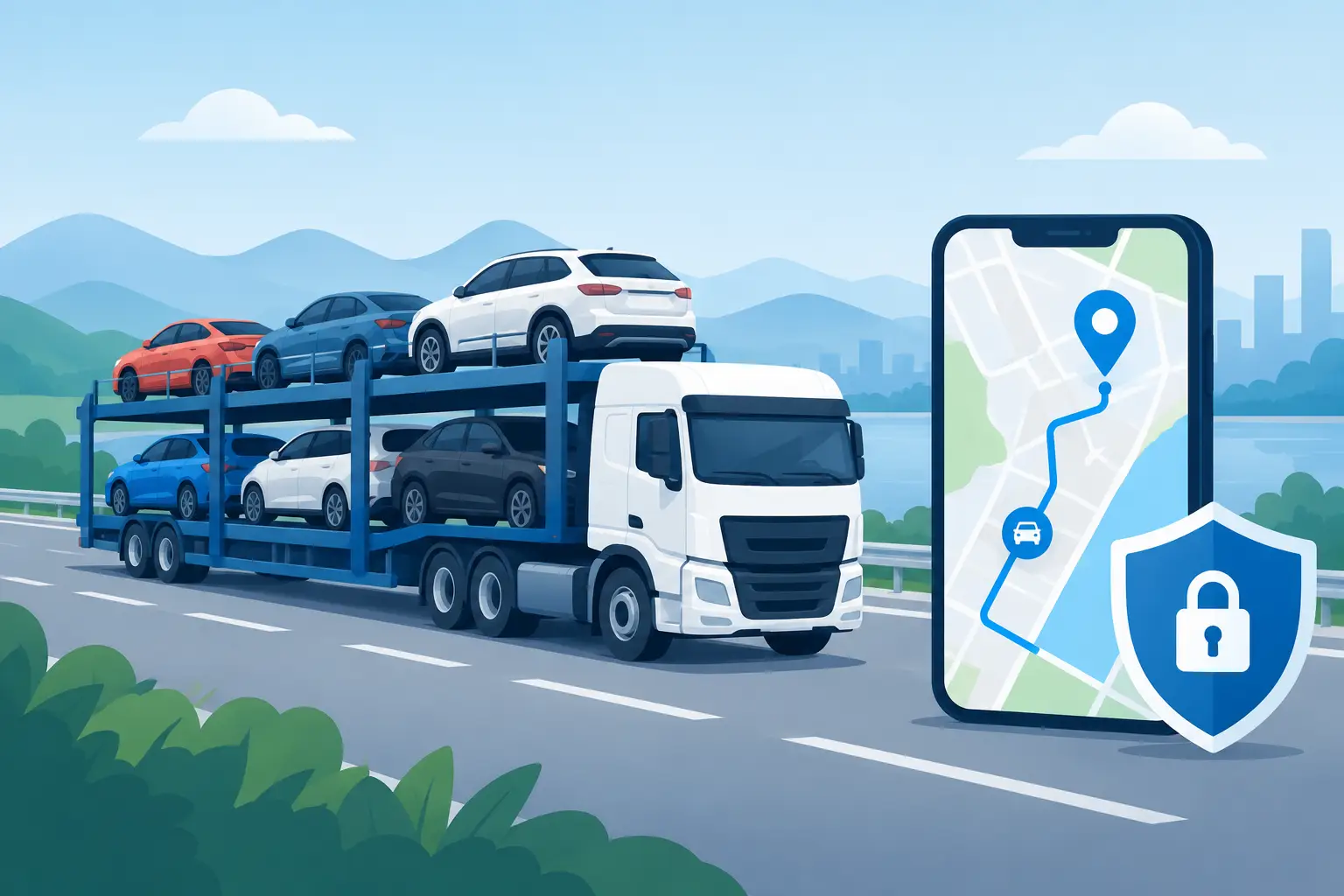
A recovery arranged after an accident, a prestige car collected from a dealership, or a vehicle moving across the UK is not simply a journey from A to B. The owner needs to know where the vehicle is, whether it is secure and when it will arrive. Vehicle tracking provides that visibility, but its real value depends on how the transport provider uses the information and communicates it.
For a standard vehicle, a location update may be enough. For a collector’s car, dealership stock, a vehicle awaiting repair or an insurance-led recovery, the chain of custody matters just as much. Clear tracking updates reduce uncertainty, support practical planning and give the customer confidence that their vehicle is being managed properly.
What vehicle tracking means in transport and recovery
Vehicle tracking usually refers to location information obtained through a GPS-enabled device or a connected recovery vehicle. During a planned movement, it can help a transport operator monitor the route, identify delays and provide accurate progress updates. During an urgent recovery, it can also help confirm the attending vehicle’s location and estimate when assistance is likely to arrive.
It is useful to separate tracking of the recovery or transport vehicle from tracking fitted to the customer’s vehicle. A professional operator may track its own fleet while a car is on board, without installing anything in the vehicle being moved. This is often the most practical option for one-off recovery and transport work, particularly where a prestige vehicle must remain untouched.
The level of detail available will vary. A customer may receive a collection window and arrival estimate, while a dealership or insurer handling multiple movements may need more regular status updates. There is no single right approach. The important point is that expectations are agreed before collection, especially for time-sensitive or high-value jobs.
Why tracking matters when a vehicle is off the road
Breakdowns and accidents create pressure quickly. A vehicle may be stranded at the roadside, held at a repairer, or unable to remain where it is due to safety, access or insurance requirements. Knowing that a recovery vehicle is allocated and where it is can make a difficult situation more manageable.
For the customer, updates remove the need to repeatedly chase for information. For garages and bodyshops, an accurate arrival estimate allows ramps, workshop space or secure parking to be prepared. For insurers and fleet managers, a documented timeline can help coordinate the next stage of the claim or repair process.
Tracking is not a substitute for good communication. Satellite signal can be affected by underground car parks, rural areas and certain covered locations. Road closures, traffic and recovery work at the scene can also change an original estimated time of arrival. A dependable provider explains delays plainly rather than allowing the customer to rely on a static estimate that is no longer realistic.
Vehicle tracking for prestige and specialist cars
High-value vehicles require a more controlled approach than basic towing. The concern is not only getting the car to its destination. It is protecting bodywork, wheels, low ground clearance, mechanical components and the vehicle’s overall condition throughout loading, transport and unloading.
In this context, vehicle tracking is one part of a wider process. The strongest reassurance comes from careful collection planning, suitable equipment, secure loading, condition checks where required and clear handover arrangements. Location information supports that process by showing progress, but it cannot correct poor handling or unsuitable transport methods.
Owners should also consider the privacy side. Sharing real-time location data for a valuable vehicle should be limited to people with a genuine operational reason to receive it. A provider should use tracking information responsibly and avoid distributing precise details unnecessarily. For some customers, simple milestone updates such as collected, en route and delivered are preferable to live location access.
What to ask before arranging tracked transport
Before booking a recovery or planned transport service, establish what updates you will receive and who will be your point of contact. This is particularly useful when the vehicle is not being collected from your home or delivered directly to you.
Ask whether the transport vehicle is monitored while your car is on board, how collection and delivery are confirmed, and how delays will be communicated. If the vehicle is damaged, immobilised, modified or particularly low, explain this at the outset. These details affect the equipment, loading plan and time required at collection.
For a dealer, garage or insurer, it is sensible to agree the information needed at each stage. That may include the collection time, vehicle condition, destination contact, proof of delivery and any storage arrangement. Keeping the process clear prevents gaps between recovery, repair, appraisal and onward transport.
There are four practical checks worth making before the vehicle moves:
- Confirm the full collection and delivery addresses, including access restrictions, gates and contact names.
- Provide the registration, vehicle type and any faults or damage that could affect loading.
- Agree how and when progress updates will be given, particularly if the journey is long or crosses into Europe.
- Confirm who is authorised to release and receive the vehicle, along with any keys, documents or accessories travelling with it.
These checks take little time but can prevent avoidable delays. They also create a clearer record of responsibility from the first call to final handover.
When live updates are most useful
Live or near-live updates are most valuable where timing affects other people. A dealership may need to prepare a vehicle for a customer handover. A garage may need to know when an accident-damaged car will arrive. A family waiting for a broken-down vehicle to be brought home may need to arrange access or alternative travel.
They are equally useful for longer journeys. A car travelling between regions, being collected after an auction, or moving between the UK and Europe may pass through several handover points. Regular communication helps every party plan around the movement without asking the driver to stop and respond to repeated calls.
That said, continuous monitoring is not always necessary. For a short local recovery, fast attendance, safe loading and a clear destination confirmation often matter more than a map link. For an urgent roadside situation, the priority is resolving the immediate safety issue. The right level of tracking should support the job, not distract from it.
Tracking, secure storage and the next step
A recovered vehicle does not always go straight to a repairer or home address. After an accident, out-of-hours breakdown or delayed assessment, secure short-term storage may be the sensible option. In these cases, clear status updates become especially valuable because the customer needs to know not only that the vehicle has been collected, but where it is being held and what happens next.
A well-managed transport process should make this straightforward. The operator confirms collection, records the agreed destination, keeps the relevant parties informed and arranges onward movement when authorised. MHJ Prestige Transport applies this practical approach across urgent recovery, specialist vehicle movements and secure storage, with the care expected for valuable vehicles.
Vehicle tracking works best when it sits behind a capable operation rather than being treated as a feature on its own. Choose a provider that can explain the collection plan, handle the vehicle correctly and give you useful updates when they matter. When your vehicle is out of your hands, clear information and careful control make the journey easier to trust.