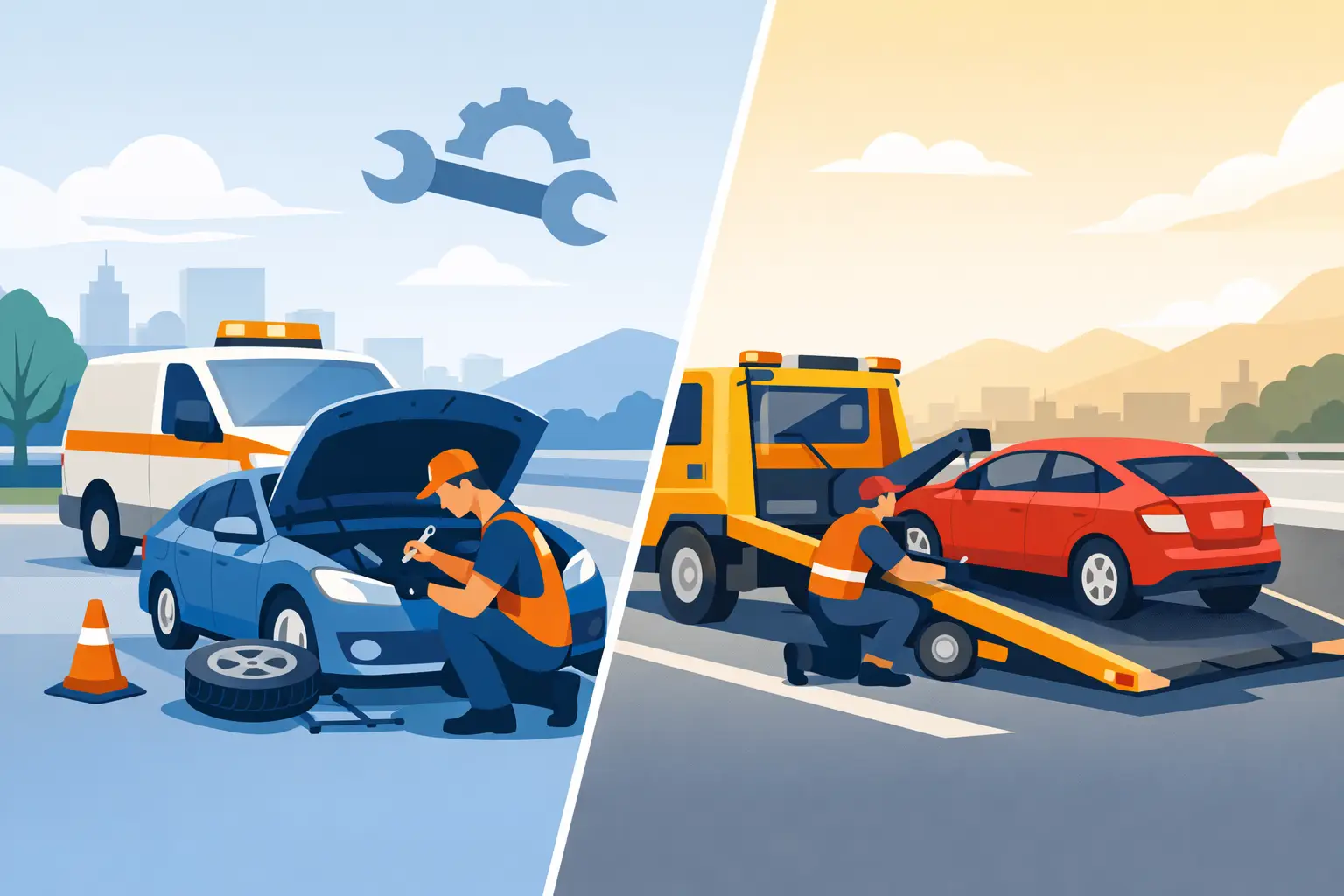
A warning light on the M6, a puncture outside Burton upon Trent, or accident damage that makes a car unsafe to move all create the same immediate question: what support is actually needed? Roadside recovery versus vehicle towing is not simply a choice of vehicle or price. It determines how safely your vehicle is handled, where it goes next and whether further damage is avoided.
For a routine, roadworthy vehicle that needs moving a short distance, towing may be enough. For a breakdown, collision, prestige car or vehicle requiring secure onward transport, recovery is usually the more controlled option. The right response depends on the condition of the vehicle, its location and the destination you need.
Roadside recovery versus vehicle towing: the operational difference
Vehicle towing generally means pulling a vehicle from one place to another. Depending on the circumstances, this may involve a tow bar, dolly or recovery vehicle. It can be appropriate when the vehicle can safely roll, steer and brake, and when the journey is short and the legal, mechanical and road conditions allow it.
Roadside recovery is broader. It starts with making the scene safe, assessing whether the vehicle can be repaired or moved, and then loading or transporting it using suitable equipment. A recovery operator may take the vehicle to a garage, your home, a dealership, a secure storage location or another agreed destination. The service can also involve coordinating post-accident movement, dealing with a vehicle that will not roll and arranging longer-distance transport.
That distinction matters because a vehicle that appears towable may not be safe to tow. If steering is damaged, suspension components are bent, a wheel is locked, tyres are compromised or fluid is leaking, dragging or towing it can worsen the fault. In those cases, proper recovery and secure loading are the sensible route.
When towing may be suitable
Towing can be a practical solution for straightforward, low-risk situations. For example, a vehicle may need to be moved from a private driveway to a nearby garage after a minor mechanical issue, provided its wheels turn freely and its braking and steering remain functional.
It can also suit certain controlled, short-distance moves where the vehicle is not heavily damaged and there is no risk to other road users. However, the vehicle still needs to comply with relevant legal requirements, and the person carrying out the tow must use appropriate equipment and understand the limitations of the vehicle being moved.
The trade-off is that towing places some of the journey's forces through the disabled vehicle itself. Its wheels remain on the road, and its tyres, suspension, transmission and steering may all be affected. Modern cars can be particularly sensitive. Automatic, electric, hybrid and four-wheel-drive vehicles often have manufacturer-specific restrictions on towing. Getting this wrong can create expensive drivetrain damage on top of the original problem.
When roadside recovery is the safer option
Recovery is normally the better choice when there is any doubt about the vehicle's roadworthiness. That includes non-starts in unsafe locations, accident damage, wheel or suspension failure, transmission faults, flat tyres with no usable spare, electrical issues, overheating and vehicles stuck off the road.
A professional recovery service is also preferable when traffic conditions are difficult. A breakdown on a motorway, dual carriageway or narrow rural road needs more than a quick tow. The priority is protecting the people involved, managing the position of the vehicle and removing it without creating an additional hazard.
Recovery becomes essential where a vehicle cannot be moved under its own power or cannot be safely pulled. A low-loader, winch or specialist loading method can lift and secure the car rather than relying on damaged mechanical components. This helps protect the vehicle during collection and gives the operator greater control from roadside to destination.
For motorists, the benefit is clarity. Rather than trying to decide whether a damaged vehicle will survive a tow, you can arrange for it to be assessed, recovered and delivered where it needs to be. That is particularly valuable after an accident, when the condition of the vehicle may not be obvious.
Prestige, electric and specialist vehicles need more care
Not every vehicle should be handled in the same way. Prestige cars may have low ground clearance, wide bodywork, delicate alloy wheels, performance braking systems or specialist suspension settings. A rushed approach can damage bumpers, splitters, wheels or undertrays before the transport journey has even started.
For these vehicles, loading angle and tie-down points matter. The vehicle should be secured correctly without placing stress on unsuitable components. An experienced operator will assess access, ground clearance and whether the vehicle rolls freely before deciding how to load it.
Electric and hybrid vehicles add further considerations. Damage to battery areas, high-voltage warnings, loss of drive and manufacturer recovery procedures all need careful attention. Some electric vehicles cannot be conventionally towed with driven wheels on the ground. Recovery on a suitable transport vehicle is commonly the safer option, particularly after a collision or drivetrain fault.
The same principle applies to classic cars, race cars, modified vehicles and cars with air suspension. A cheap or improvised tow may look convenient at the roadside, but the cost of correcting avoidable transport damage can be substantial.
Accident recovery is more than moving a damaged car
After an accident, the priority is personal safety. If anyone is injured, emergency services should be contacted. Once people are safe, the vehicle needs to be assessed without assuming it is fit to move.
Even relatively light impact damage can affect steering alignment, wheel position, cooling systems, lights or body panels. A car may start and still be unsafe to drive or tow. Leaking fluids, deployed airbags and damaged tyres are further reasons to arrange professional recovery.
The next decision is destination. Some owners need their vehicle taken to an approved repairer, while others may need it moved to a dealership, garage or secure storage location while insurance and repair arrangements are made. A recovery provider that can manage collection, transport and short-term secure storage can reduce the number of separate arrangements required at a stressful time.
Take photographs where it is safe to do so, retain relevant details from other parties and tell the recovery operator about visible damage, wheel condition and whether the vehicle is obstructing traffic. Accurate information helps the right equipment arrive first time.
Choosing the right service for the destination
The destination often determines whether basic towing is enough. A short move to a local garage is very different from transporting a prestige vehicle across the UK or into Europe. Longer journeys call for proper route planning, secure loading and a provider equipped to keep the vehicle stable and protected throughout transit.
Dealerships and garages may need a vehicle delivered at a particular time, while collectors and prestige owners may require greater care during collection and handover. If a vehicle is immobile, lowered or damaged, share that information before collection. It allows the operator to plan the loading method rather than arriving with equipment that is unsuitable for the job.
For planned movements, recovery-style vehicle transport also gives more control than asking someone to tow a car behind another vehicle. This is relevant for non-running project cars, auction purchases, track vehicles and cars being relocated after a sale. The vehicle is treated as cargo to be protected, not simply as a disabled car to be pulled along.
Questions to ask before arranging collection
A good recovery booking begins with clear information. Be ready to provide the vehicle registration, make and model, exact location, destination and a concise description of the problem. Mention if the vehicle is automatic, electric, hybrid, four-wheel drive, lowered, locked, has damaged wheels or is in a restricted-access area.
It is also worth confirming whether the operator can handle the vehicle in its current condition, whether secure storage is available if needed, and whether the agreed destination can receive it. If you own a prestige or specialist vehicle, ask how it will be loaded and secured. Straight answers are a sign that the provider understands the job rather than treating every collection as a standard tow.
Price matters, but it should not be the only factor. The lowest quote may not account for difficult access, additional damage, distance, overnight collection or specialist loading. A clear scope from the outset is more useful than a cheap headline price followed by avoidable delays or complications.
A controlled response when your vehicle cannot continue
The most effective decision is usually based on risk, not convenience. If the car is undamaged, roadworthy enough to be moved and travelling only a short, controlled distance, towing may be appropriate. If there is collision damage, a mechanical fault, uncertainty over safety or a valuable vehicle at stake, roadside recovery gives better protection and greater control.
MHJ Prestige Transport provides 24/7 recovery and specialist vehicle transport from Burton upon Trent for urgent collections, accident recovery, secure storage and planned movements across the UK and Europe. When you call, give the vehicle condition and location clearly, then let the right recovery plan protect both your journey and your vehicle.