A warning light on the M1 at night is not the time to discover your roadside assistance only covers the bare minimum. When a vehicle stops unexpectedly, the real question is not simply who can tow it. It is who can respond quickly, handle the vehicle properly, and take control of what happens next.
For many drivers, roadside assistance is treated as a basic rescue service. In practice, the quality of that service matters a great deal, especially when the vehicle is valuable, damaged, immobilised in a difficult location, or needs to go somewhere specific rather than just the nearest garage. That is where the difference between standard recovery and specialist support becomes clear.
What roadside assistance should actually cover
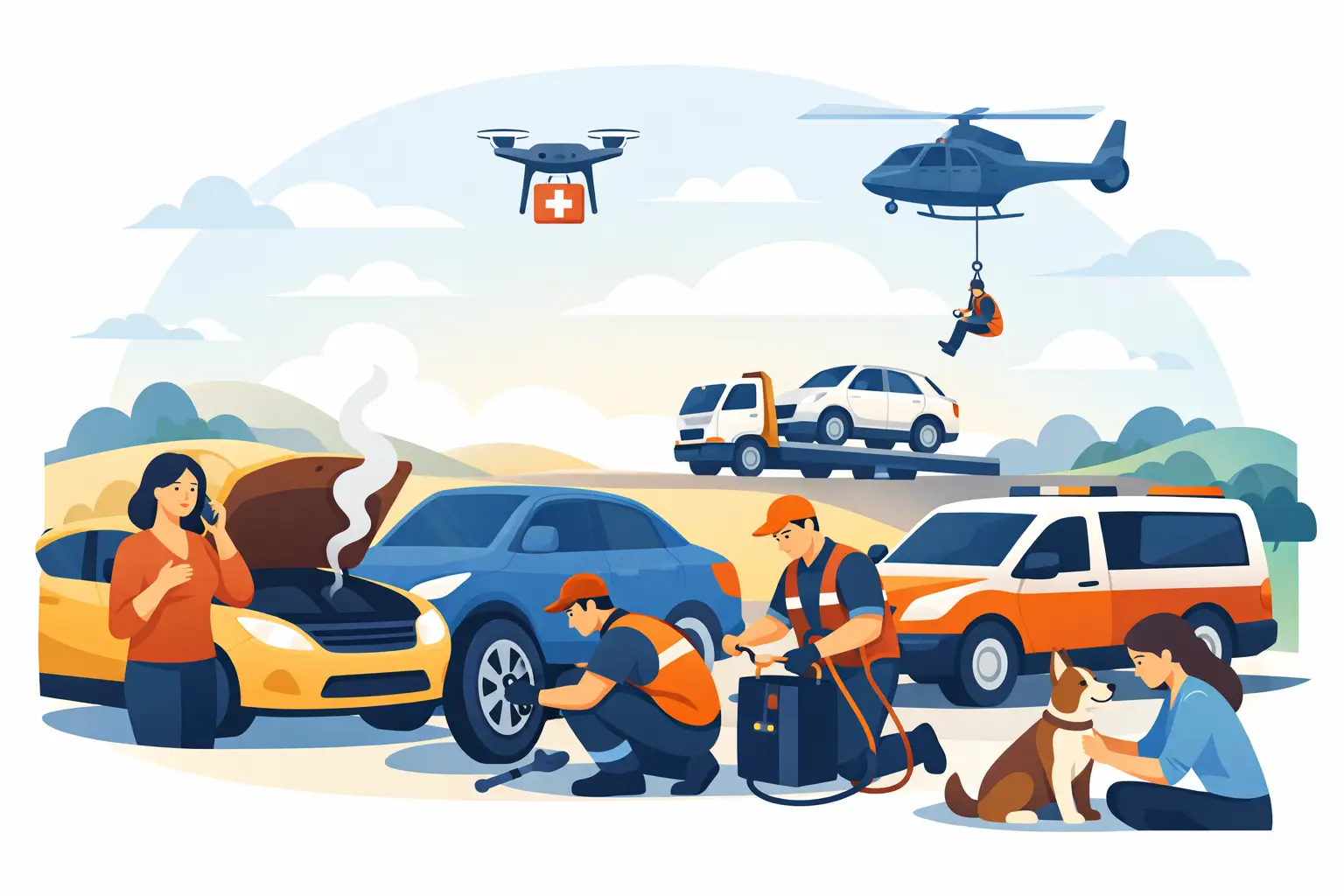
At its simplest, roadside assistance is immediate support when a vehicle cannot continue its journey. That may be due to a mechanical failure, a flat battery, a puncture, an accident, or an electrical fault that makes the vehicle unsafe or impossible to drive.
But the best service does more than remove a stranded vehicle from the roadside. It should also bring order to a situation that is often time-sensitive and stressful. That means quick dispatch, clear communication, safe loading, transport to the right destination, and the ability to deal with follow-on needs such as secure storage or onward delivery.
This matters even more for prestige, performance, classic, or specialist vehicles. These are not cars that should be treated as routine tow jobs. Ground clearance, bodywork, wheel design, transmission type, and post-incident condition all affect how recovery should be handled. The wrong equipment or rushed loading can create further damage that costs more than the original breakdown.
The difference between basic recovery and specialist roadside assistance
Not every recovery provider is set up for the same type of work. Some are built around high-volume local towing, which can be entirely suitable for ordinary roadside call-outs. Others are equipped to support urgent breakdowns while also managing planned transport, accident logistics, and secure storage.
That distinction matters if your vehicle is high-value, non-running, recently involved in a collision, or heading to a particular repairer, dealership, home address, storage site, or onward transport point. In those cases, you need more than availability. You need controlled handling and a team that understands what the vehicle requires.
A strong roadside assistance service should be able to answer practical questions quickly. Can the vehicle be recovered safely if the steering is compromised? Can it be moved after an accident without creating additional risk? Can it be taken to a specialist garage rather than the nearest available workshop? If the destination is closed, is secure short-term storage available?
These details are easy to overlook until the moment they matter. Once a vehicle is stranded, the right operator saves time. The wrong one can create delays, added movement, poor handover, and unnecessary uncertainty.
Why response time is only part of the picture
Fast attendance is important, particularly on motorways, A-roads, and exposed roadside locations. Nobody wants to wait longer than necessary in a vulnerable position. But response time on its own is not the full measure of a good service.
The real test is how the recovery is managed from first call to final drop-off. A prompt arrival means little if the operator lacks the right equipment, cannot load the vehicle cleanly, or takes it to the wrong destination because the process was not agreed properly. Efficiency is not just speed. It is correct action at each stage.
For private motorists, that means less disruption and less guesswork. For dealerships, garages, insurers, and collectors, it means reduced risk and a cleaner chain of custody. When a vehicle has value beyond its basic use, handling standards become part of the service, not an optional extra.
Roadside assistance for prestige and specialist vehicles
Prestige vehicles demand a more careful approach even in straightforward breakdown scenarios. Low splitters, wide alloys, performance tyres, limited ground clearance, and sensitive drivetrains all influence recovery method. The same applies to classic vehicles, sports cars, modified cars, and vehicles with cosmetic finishes that owners understandably want protected.
This is where roadside assistance needs to overlap with specialist transport thinking. The operator should understand loading angles, securing points, and how to move a vehicle without adding avoidable wear or visible damage. A prestige car owner is not only asking, "Can you collect it?" They are asking, "Will it arrive in the same condition?"
That question also applies after accidents. A damaged high-value vehicle may need to be moved carefully, stored securely, and then transported onward once the next decision has been made by the owner, insurer, or repairer. A provider that can manage recovery and post-recovery logistics is often the more practical choice because fewer handovers usually mean fewer problems.
When planned transport and roadside support overlap
One of the most overlooked aspects of roadside assistance is that it often leads directly into planned transport. A breakdown may happen on a long-distance journey. An imported or purchased vehicle may need onward movement after recovery. An accident-damaged vehicle may need temporary storage before being taken to a bodyshop. A dealership may require collection from a roadside location and delivery into workshop control the next morning.
This is why operational range matters. If a provider only handles local recoveries, the next stage may need to be arranged separately. That can be workable, but it adds delay and another layer of administration. A transport partner that can respond to an emergency and then continue with specialist movement across the UK or into Europe gives customers a more controlled process.
For businesses, this is particularly useful. Garages, fleet operators, insurers, and dealerships often need a provider that can adapt quickly from emergency response to scheduled movement. The fewer separate parties involved, the easier it is to keep timelines, paperwork, and vehicle handling consistent.
What to ask when you need roadside assistance
In a breakdown or accident, clarity matters. The first conversation should establish where the vehicle is, its condition, whether it is safe to move, and where it needs to go. If the vehicle is prestige, modified, lowered, non-starting, or accident-damaged, say so immediately. These details affect how recovery is planned.
It is also sensible to confirm whether the destination is fixed or likely to change. Sometimes the nearest safe storage is the right first step, especially late at night or after an incident outside business hours. In other cases, direct delivery to a chosen repairer saves time. Neither option is automatically best. It depends on timing, location, vehicle condition, and who needs to inspect it next.
If you are acting on behalf of a customer, client, dealership, or insurer, handover details are just as important as collection details. Good roadside assistance is operationally tidy. It should reduce the amount of chasing, explaining, and rearranging required afterwards.
Roadside assistance for business users
For commercial clients, roadside recovery is not only about getting a vehicle off the road. It is about protecting schedules, customer commitments, workshop planning, and asset value. A delayed or mishandled recovery can disrupt several parties at once.
That is why many business users look for a provider that can support urgent collection, timed delivery, secure storage, and specialist handling under one service model. If the vehicle is customer-owned, prestige stock, a collector vehicle, or part of an insurance claim, confidence in the transport partner becomes commercially important.
This is also where a specialist operator can offer more value than a basic local tow. Controlled loading, careful movement and clear communication are not luxury features. They are part of a dependable service standard.
Choosing roadside assistance with the right level of care
Price always matters, but the cheapest option is not always the lowest-risk option. If the vehicle is ordinary and the journey is short, a standard local recovery may be perfectly suitable. If the vehicle is high-value, damaged, time-sensitive, or heading to a specialist destination, experience and handling capability should carry more weight.
The right choice depends on the situation. Some customers need immediate roadside support only. Others need recovery, storage, and onward transport managed as one job. That is often where specialist operators such as MHJ Prestige Transport fit best - particularly when urgency and vehicle care matter equally.
When a vehicle stops, most people want the same thing: a quick, calm answer from someone who knows exactly what to do next. Good roadside assistance provides that. Better roadside assistance protects the vehicle as well.