
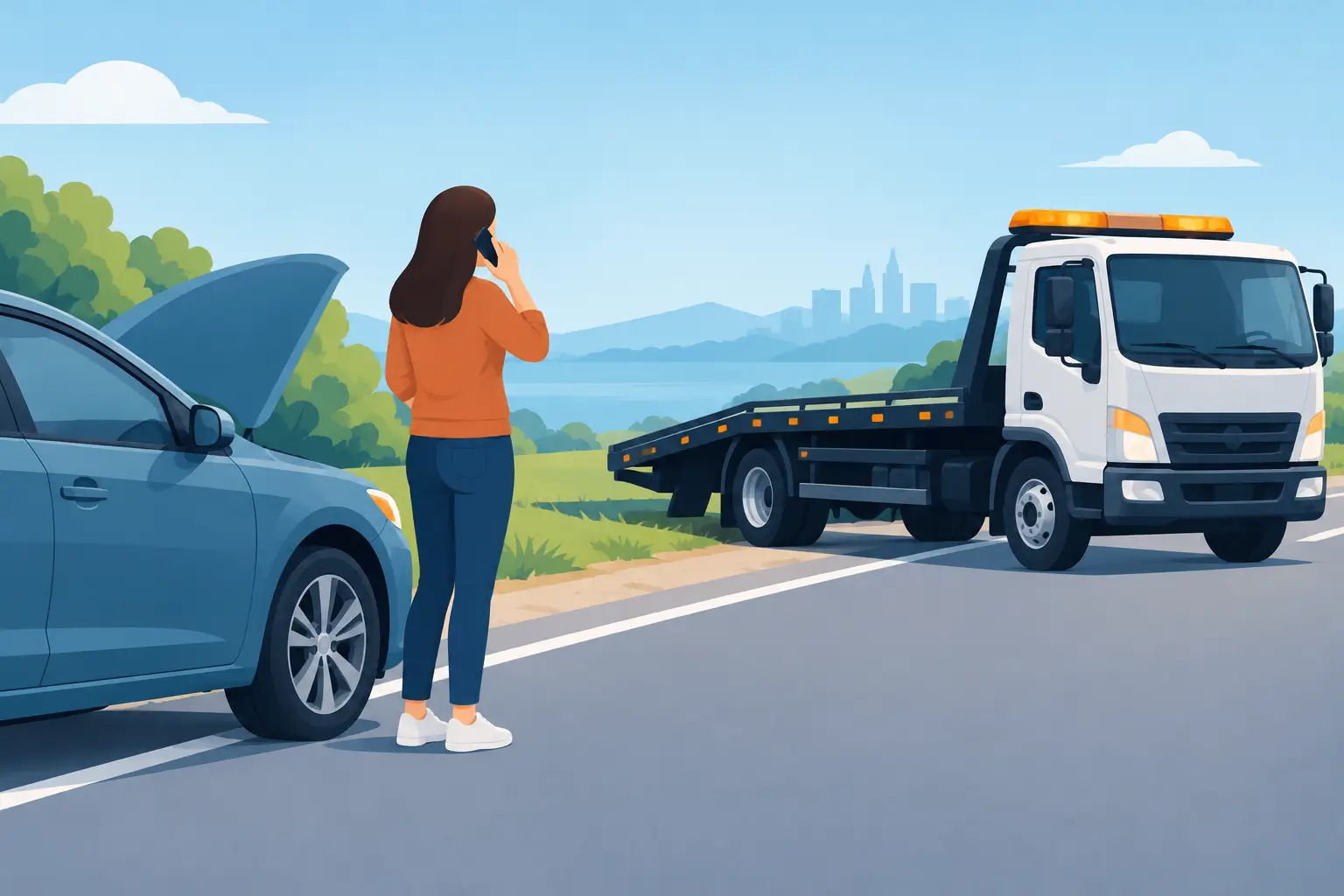
A breakdown rarely happens where it is convenient. It may be on a live motorway lane, outside your home before work, or on an unfamiliar road late at night. When you need to request emergency roadside towing, the priority is not simply getting the vehicle moved. It is keeping people safe, providing accurate information and arranging recovery that suits the vehicle’s condition.
For a standard family car, a straightforward tow may be enough. For a prestige, low-clearance, electric or accident-damaged vehicle, the recovery method matters far more. The wrong handling can create further damage before the vehicle even leaves the roadside.
Make the Roadside Safe Before You Call
If your vehicle is still moving, do not stop abruptly unless there is an immediate danger. Move to a safe location where possible, such as a lay-by, hard shoulder or quiet side road. Switch on your hazard warning lights and avoid standing near moving traffic.
On a motorway, get behind the safety barrier if you can do so safely. Keep passengers away from the carriageway and never attempt roadside repairs in a live lane. If the vehicle has stopped in a dangerous position, or there has been a collision with injuries, contact the emergency services first.
Once everyone is in a safe place, assess only what you can see without putting yourself at risk. You do not need to diagnose the fault perfectly. A recovery operator needs clear facts: whether the vehicle starts, whether it can roll, whether there is visible damage and whether any warning lights or fluids are present.
Information Needed to Request Emergency Roadside Towing
A fast, controlled recovery starts with accurate information. Before calling, have your mobile phone available and gather the essential details if it is safe to do so. This reduces delays and helps the operator send the correct recovery vehicle and equipment.
You should be ready to provide:
- Your precise location, including road number, direction of travel, junction, nearby landmark or postcode
- The vehicle registration, make, model and colour
- The reason for recovery, such as a mechanical breakdown, flat tyre, accident damage, no-start fault or electrical issue
- Whether the vehicle can be driven, steered, braked and rolled safely
- The number of people travelling and whether anyone needs onward transport
- The intended destination, whether that is home, a garage, a dealership, a bodyshop or secure storage
Location is often the biggest cause of delay. A description such as “near Burton” is not enough for a recovery crew working under pressure. Use your phone’s map location if available, note the closest motorway marker post or identify the nearest junction. If you are on a smart motorway, motorway marker signs and emergency roadside telephones can help establish exactly where you are.
Be honest about the vehicle’s condition. If a wheel is damaged, steering is locked, airbags have deployed or the car is leaking fluid, say so. These details affect loading plans and whether a standard recovery lorry, flatbed or specialist equipment is required.
Choose Recovery Based on the Vehicle, Not Just Distance
Not every towing request should be handled in the same way. The cheapest or nearest option may not be the right one where the vehicle is valuable, low to the ground or damaged. The method of transport should reflect the condition of the car and the risk of moving it.
A vehicle with a failed engine but working wheels and steering may be suitable for normal recovery. A car involved in an accident may need careful winching and a flatbed to prevent further damage. Prestige vehicles, sports cars and vehicles with low front splitters often need specialist loading angles, appropriate ramp extensions and secure wheel restraint systems.
Electric and hybrid vehicles also require additional care. Damage to the battery area, high-voltage warnings or an underbody impact should always be declared. In some cases, the recovery destination may need to be selected with the vehicle manufacturer, insurer or an approved repairer in mind.
For longer-distance recovery, planned onward movement or a vehicle that should not be left at a roadside compound, ask about direct transport. This can reduce handling points and provide greater control over where the vehicle is stored or delivered.
What to Ask the Recovery Provider
When you request emergency roadside towing, clear questions help you understand what will happen next. Confirm the estimated arrival process, the collection point and the intended destination. Ask whether the recovery team can accommodate the vehicle’s specific condition, particularly after an accident or where the car has low ground clearance.
It is also sensible to establish whether the vehicle will be taken directly to your chosen destination or moved to a holding location first. There are occasions when immediate roadside conditions, police instructions or out-of-hours workshop access make temporary storage the practical option. If that happens, ask where the vehicle will be kept, how it will be secured and how onward transport will be arranged.
For high-value vehicles, ask how the car will be loaded and restrained. A professional provider should be comfortable discussing vehicle condition, access requirements and any known handling precautions. This is especially relevant for collectors’ cars, modified vehicles and prestige models with specialist jacking or towing guidance.
After an Accident: Protect the Vehicle and the Evidence
Following a collision, recovery is only one part of the situation. If it is safe, take photographs of the vehicle position, damage, road conditions and any relevant signage before it is moved. Exchange details with other parties where required, but avoid accepting blame at the roadside.
Remove personal belongings, documents, keys and valuables if possible. If the vehicle cannot be accessed safely, tell the recovery operator. They can record the vehicle condition and arrange secure handling.
Do not allow an accident-damaged vehicle to be dragged if it risks causing further harm to the suspension, tyres, bodywork or undertray. A suitable flatbed recovery can be the safer option, even where the vehicle appears to be partly driveable. Short-term secure storage can also give you time to speak with your insurer, dealership or repairer without leaving a valuable vehicle exposed.
Preparing for Collection Without Delaying It
Once recovery is booked, keep your phone charged and remain contactable. If you need to leave the immediate location for safety, give the operator clear instructions and remain nearby where possible. Do not abandon the vehicle without confirming that the recovery provider can locate it and has authority to collect it.
Have the keys, registration information and destination details ready. If the car is being delivered to a garage or dealership, check their opening hours and whether they can accept an out-of-hours drop-off. If they cannot, secure storage may be the better option than leaving the vehicle unattended.
If you own a prestige vehicle, mention any special instructions before the recovery team arrives. This might include an alarm procedure, a non-standard parking brake, an immobiliser issue, a low front end or a preferred lifting point. Small details shared early can prevent unnecessary delays at collection.
Recovery That Continues Beyond the Roadside
The right recovery provider should give you a practical next step, not merely remove the vehicle from the road. MHJ Prestige Transport supports urgent recoveries alongside careful vehicle transport and secure short-term storage, allowing owners, dealerships and insurers to manage the next stage with confidence.
Whether the vehicle needs to go to a local garage, a specialist repairer elsewhere in the UK or a secure location while decisions are made, the destination should be part of the recovery plan. This is particularly valuable when the vehicle is not safe to drive, the repairer is closed or the vehicle needs greater protection than a general holding area can provide.
A roadside failure is stressful enough without uncertainty over what happens to the vehicle next. Put safety first, share accurate details and choose recovery that matches the vehicle and the circumstances. That gives the recovery team the best chance of moving your vehicle carefully, promptly and to the right place.