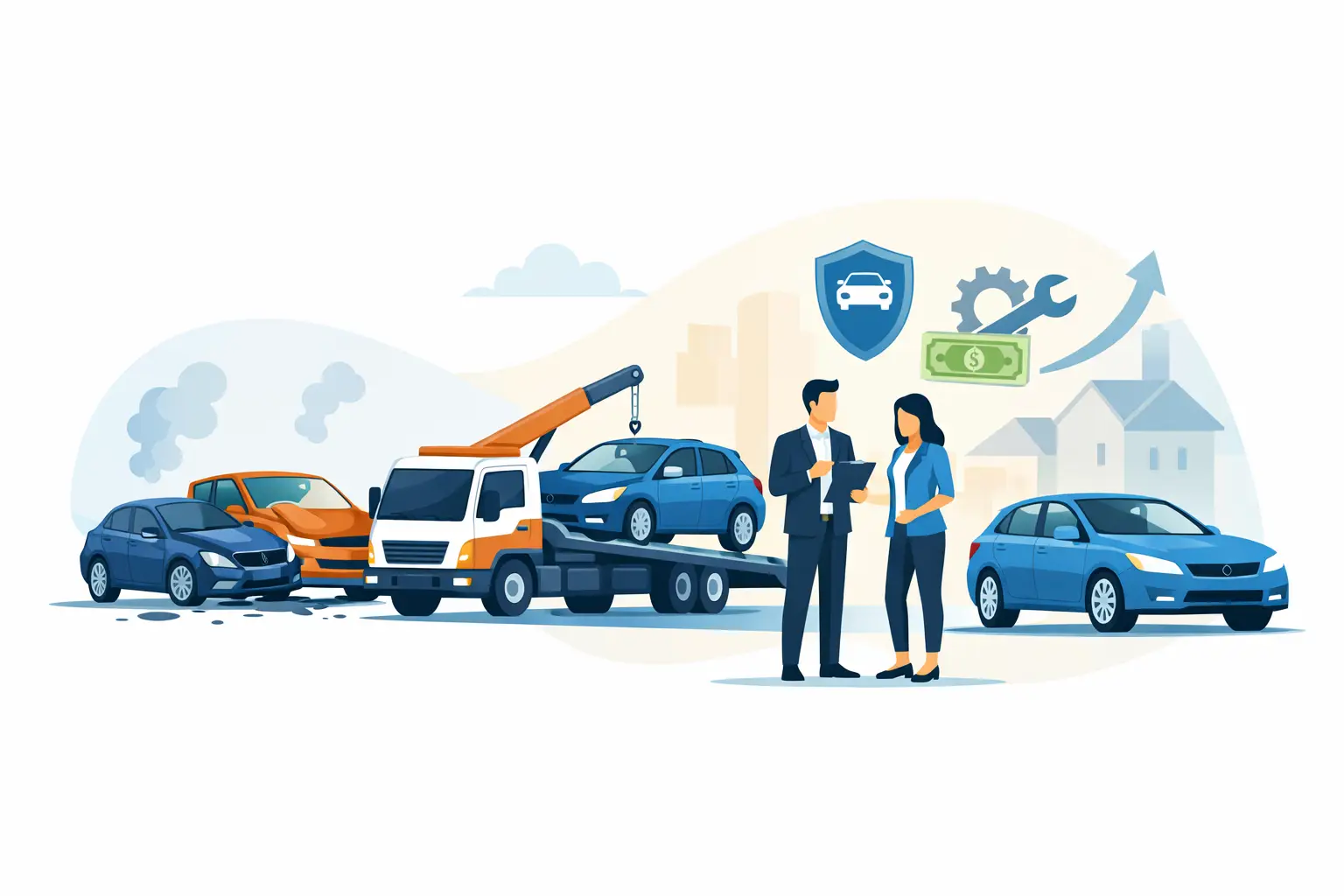
The first hour after a collision usually sets the tone for everything that follows. When your car is damaged, blocking a road, or no longer safe to drive, recovery of vehicle after accident is not just about getting it moved. It is about protecting the vehicle from further damage, keeping people safe, and making sure the next step is handled properly.
For many drivers, this is where confusion starts. You may be dealing with police, other motorists, insurers, a garage, and possibly a vehicle that needs specialist transport rather than a basic tow. If the car is prestige, modified, low-clearance, or simply too badly damaged to roll cleanly, the method of recovery matters more than most people realise.
What recovery of vehicle after accident actually involves
Accident recovery is more than roadside collection. A proper recovery job starts with assessing the vehicle’s condition, its position, and whether it can be loaded safely without causing additional harm. That sounds straightforward, but the details matter.
A vehicle with steering damage, suspension failure, wheel impact, or bodywork distortion cannot always be dragged or winched in the same way as a standard non-runner. If it has been hit from the side, if airbags have deployed, or if fluids are leaking, the recovery plan has to account for those risks before transport even begins.
This is why experienced operators focus on controlled loading, suitable equipment, and safe onward movement. In some cases the right destination is a repairer. In others it may be a secure storage site while insurers, engineers, or owners decide what happens next. The best outcome depends on the condition of the vehicle and what needs to happen after collection.
Why the right accident recovery service matters
A poor recovery can turn repairable damage into a bigger problem. Low front splitters, delicate alloys, performance braking systems, and damaged undertrays do not respond well to rough handling. Even on standard vehicles, careless loading can worsen alignment issues, damage tyres, or scrape bodywork that survived the accident itself.
That is one of the clearest trade-offs in this situation. The fastest available operator is not always the best option if they do not have the right equipment or experience. On the other hand, waiting too long for a specialist can create its own issues if the vehicle is in a dangerous location. The right choice is usually a recovery provider that can respond quickly and handle the vehicle according to its condition, rather than treating every job the same way.
For prestige and high-value vehicles, that difference is even more obvious. These cars often sit lower, cost more to repair, and need more careful loading angles. Owners are right to be cautious. A recovery provider should be able to explain how the car will be moved, where it will be taken, and whether secure storage is available if immediate repair is not possible.
What to do immediately after a collision
Once everyone is safe and emergency services have been contacted if needed, the next step is to think practically. If the vehicle cannot be driven, or should not be driven, arrange professional recovery as soon as possible.
Take clear photos of the scene and the vehicle if you are able to do so safely. Note the location, visible damage, registration details, and any police incident reference. If your insurer has specific reporting requirements, keep those to hand. These details help later, but they also help the recovery provider understand what they are attending.
If the vehicle is leaking fluids, has a damaged wheel, or is facing the wrong way in a difficult position, say so when you call. If it is a prestige model, modified car, electric vehicle, or something with low ground clearance, mention that as well. Good recovery starts with accurate information.
Where should the vehicle go after recovery?
This depends on the circumstances. Sometimes the vehicle needs to go directly to an approved repairer. Sometimes it makes more sense to move it into secure storage first, especially when liability is being assessed or a garage cannot receive it immediately.
Storage can be the better option when there is uncertainty around repair authorisation, engineering inspection, or parts delays. It gives owners, insurers, or dealers time to decide the next step without leaving the car exposed at the roadside or outside an unsuitable workshop. It also avoids rushed decisions when the priority should be safe handling.
If the vehicle is a collector car, prestige vehicle, or dealership stock, secure storage is often the more sensible route until the owner confirms where it should go. That keeps the vehicle protected while the paperwork catches up.
Recovery of vehicle after accident for prestige and specialist cars
Not every damaged car can be handled with standard roadside equipment. Prestige and specialist vehicles often need a more measured approach because of their value, construction, and clearance.
Low approach angles may require specialist loading methods. Damaged carbon fibre parts or performance bodywork can be costly to replace. Wider wheels, custom suspension, or unusual jacking points can complicate loading. If the car has suffered impact damage that affects wheel movement, transporting it safely becomes a technical job rather than a routine pickup.
This is where a general towing approach can become expensive. A provider used to prestige transport will usually think first about load angle, wheel security, body clearance, and stability in transit. That protects the vehicle not only at the roadside, but also during the journey to storage, repair, or onward delivery.
For owners who have invested heavily in their car, that level of care is not a luxury. It is basic risk control.
Working with insurers, garages and dealerships
After the initial recovery, logistics often become the real challenge. The car may need to move between storage, inspection, repair, paintwork, dealership premises, or another address entirely. Delays often happen when each stage is treated as a separate problem instead of one coordinated movement plan.
A dependable recovery and transport provider helps reduce that friction. If the same team can manage accident collection, secure storage, and onward transport, there is less chance of miscommunication or additional handling damage. That is particularly useful for insurers, garages, and dealerships managing multiple parties at once.
For trade customers, consistency matters. Vehicles need to arrive where expected, in the same condition they left, with timings that support workshop schedules and customer commitments. For private owners, the value is slightly different but just as important - less chasing, fewer unknowns, and clearer control over where the vehicle is going.
Common mistakes after an accident
One of the biggest mistakes is trying to move a damaged vehicle before its condition is properly assessed. A car may start and still be unsafe to drive. Steering, braking, suspension, or wheel alignment damage is not always obvious from the driver’s seat.
Another issue is choosing recovery purely on price. Cheap movement can cost far more if the car is loaded badly or sent to an unsuitable location. The same applies when owners feel pressured to send the vehicle somewhere before they understand their options.
There is also a practical mistake that causes unnecessary delay - not giving enough information at the point of booking. Recovery teams need to know if access is tight, if the car is underground, if wheels are locked, or if there has been severe impact damage. The more accurate the description, the smoother the job tends to be.
Choosing a provider you can trust
In urgent situations, people often just want the vehicle gone. That is understandable, but a few questions can make a big difference. Can the provider attend quickly? Do they handle accident-damaged and prestige vehicles regularly? Can they offer secure storage if needed? Do they cover onward transport, not just roadside removal?
Those details matter because accident recovery is rarely one simple movement. It is usually the first step in a wider chain that may involve repair, inspection, storage, and delivery. A provider built around controlled transport will usually manage that process better than one focused only on basic collection.
For customers across Burton upon Trent, the wider UK, and European routes, MHJ Prestige Transport operates with that wider view in mind - urgent response where needed, careful handling throughout, and transport options that fit the vehicle rather than forcing the vehicle to fit the equipment.
When a car has just been in an accident, the priority is not making a dramatic situation sound better. It is getting the vehicle recovered safely, moved correctly, and kept protected until the next decision can be made with a clear head.