
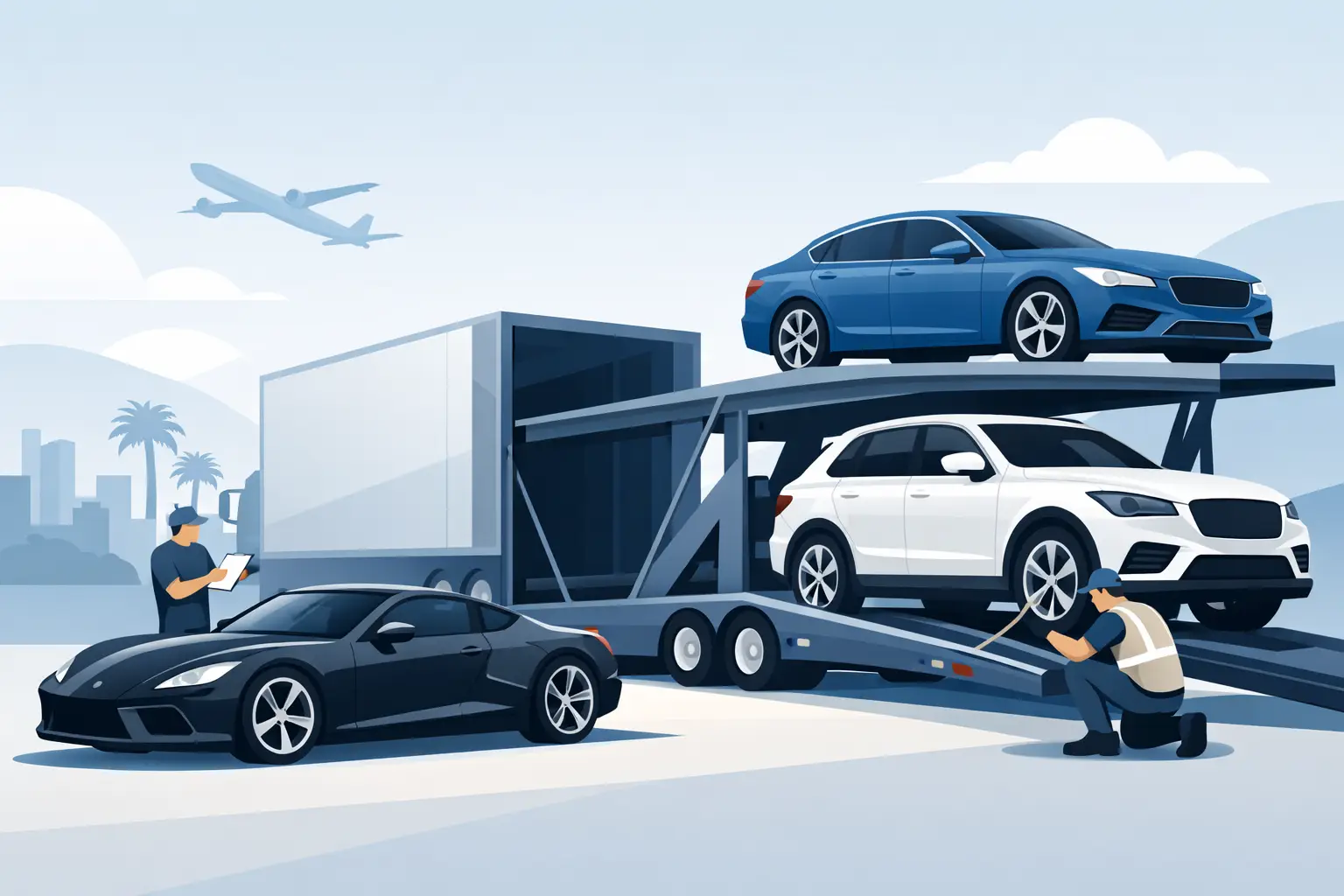
A prestige vehicle can be mechanically sound and still be difficult to move safely if collection has not been planned properly. Low ground clearance, wide bodywork, specialist tyres, non-standard starting procedures and valuable interiors all require attention before loading begins. Knowing how to prepare prestige cars for transport protects the vehicle, gives the driver the right information and helps collection happen without avoidable delay.
Whether the vehicle is being moved after an accident, collected from a dealer, transported to a specialist or relocated within the UK or Europe, preparation starts before the recovery vehicle arrives. A clear handover allows the transport team to assess access, choose the right loading approach and maintain control of the vehicle from collection to delivery.
Prepare Prestige Cars for Transport Before Collection
The first step is to tell the transport provider exactly what they are collecting. Make, model, registration, current location and destination are essential, but prestige vehicles often need more detail. Confirm whether the car is running, whether it rolls and steers freely, and whether it has suffered accident damage, suspension damage or a flat tyre.
Mention any features that affect loading. This may include very low front splitters, lowered suspension, carbon-fibre bodywork, extended wheel arches, wide wheels, a long wheelbase or an unusually low exhaust. If the vehicle has a known fault, such as an electronic parking brake that will not release or a keyless system with a flat battery, say so before the job is booked.
Access matters just as much as the vehicle itself. A transport operator needs to know if the car is in an underground car park, behind a height barrier, on a narrow residential road, in a dealer compound or on a busy roadside. Photographs of the collection area can be helpful where access is tight. The right information avoids a situation where a suitable vehicle cannot safely reach the car.
Choose the right transport approach
Not every prestige vehicle needs the same type of movement. A driveable vehicle with standard clearance may be straightforward to load, while a non-runner or a damaged supercar may require additional equipment, a lower loading angle or more time at collection.
Open transport can be a practical option for many planned moves, particularly where timing and cost are priorities. For vehicles needing added discretion or protection from road conditions, discuss the appropriate transport solution in advance. The key point is not to assume that every car can be handled in the same way as a standard breakdown recovery.
Record the Vehicle’s Condition
Before handover, take clear, time-stamped photographs of the vehicle from all sides. Include close-up images of wheels, tyres, bumpers, door edges, mirrors, roof, glass and any existing marks. Photograph the interior if it contains delicate trim, specialist controls or existing damage.
This is not about creating unnecessary paperwork. It gives both owner and operator a reliable record of the vehicle’s condition at collection. For dealership movements, insurance-related recoveries and private sales, this record can be particularly useful if several parties are involved.
If the car has accident damage, capture the damage clearly but do not attempt makeshift repairs simply to make it move. Loose body panels, leaking fluids, damaged wheels or deployed suspension components can affect how the vehicle is secured and transported. Tell the driver what is known, rather than relying on them to identify every issue at the roadside.
Check tyres, steering and ground clearance
Tyres do not need to be perfect for a vehicle to be transported, but their condition should be disclosed. A puncture, damaged alloy, locked wheel or deflated tyre changes the loading plan. The same applies if the steering is locked, the vehicle is stuck in park or the handbrake cannot be released.
Where possible, leave the steering straight and make sure the vehicle can be accessed. Do not force a damaged steering lock, gear selector or parking brake. Modern prestige cars can have complex electronic systems, and an attempted quick fix can create a more expensive problem than the transport itself.
Low clearance deserves special attention. Remove any loose splitter extensions or unsecured undertrays only if it is safe and appropriate to do so. Otherwise, explain the clearance concern so the loading method can be planned accordingly. Careful loading is preferable to rushing a car onto unsuitable ramps.
Prepare the Cabin, Keys and Documents
Remove personal possessions from the vehicle before collection. This includes luggage, sunglasses, documents with personal information, parking permits, garage remotes and valuables stored in the glovebox or boot. Transporting a vehicle is not the same as transporting household contents, and leaving items inside can create confusion at delivery.
Leave only what is necessary for safe movement. If the locking wheel nut key, charging cable, towing eye, recovery eye or manufacturer-specific starting device is needed, place it somewhere obvious and tell the driver where it is. Do not leave it loose in a side compartment where it may be missed.
Provide every key required to operate the vehicle. Many prestige cars have a main key, spare key, immobiliser fob, tracker fob or battery isolation procedure. If only one key is available, make that clear. For keyless vehicles, ensure the key can travel with the vehicle or be handed over securely under the agreed process.
Paperwork requirements depend on the reason for transport. A planned dealer delivery, private purchase or European movement may require more documentation than a local recovery. Confirm in advance what is needed for collection and delivery, particularly if ownership is changing or the vehicle is travelling across borders. Keep original documents secure unless they are specifically required for the move.
Set the Vehicle Up for Safe Loading
A modest fuel level is usually sensible. There should be enough fuel for any necessary manoeuvring, but there is no benefit in transporting a vehicle with a completely full tank unless there is a specific reason. Less fuel can reduce unnecessary weight, while an empty tank may create problems if the vehicle needs to be started, moved or tested at delivery.
Charge the battery if practical, especially if the vehicle has been stored for some time. A flat battery can affect central locking, electronic gear selection, air suspension and the ability to release the parking brake. If the battery is flat or isolated, tell the transport team before they arrive.
Deactivate or disclose any tracker, alarm or immobiliser that could trigger during transport. Some systems require transport mode, valet mode or a specific procedure to prevent alarms sounding or batteries draining. The owner should remain responsible for knowing the vehicle’s security settings, but sharing those instructions supports a controlled handover.
If the car has adjustable suspension, ask the manufacturer or specialist garage whether a transport setting is recommended. Do not alter suspension height, driving modes or electronic settings without knowing the correct procedure. The right approach varies by model, and factory guidance takes priority.
Make Collection and Delivery Straightforward
Be available at the agreed collection time, or nominate a person who can hand over the keys and answer practical questions. They should know the vehicle’s condition, its location, any access limitations and the destination contact details. A handover is far more effective when the person on site can make decisions rather than simply point to the vehicle.
At delivery, ensure there is suitable space to unload. Consider road width, gates, gradients, overhead branches, parked cars and the availability of someone to receive the vehicle. If the destination is a workshop, dealership or secure storage site, confirm opening hours and arrival arrangements before the vehicle leaves.
For an accident recovery, the priority may be getting the vehicle to safety quickly. In that case, secure storage can provide time to decide on repairs, insurance inspections or onward transport without leaving a valuable vehicle exposed at the roadside. MHJ Prestige Transport can coordinate recovery and specialist onward movement, which reduces the risk of an unsuitable secondary collection.
A well-prepared car allows the driver to focus on careful handling rather than solving access, key or condition issues at the point of loading. Give accurate information, keep the handover clear and treat transport as part of the vehicle’s care, not simply the journey between two addresses.