A breakdown rarely happens where it is convenient. Whether the vehicle has stopped outside your home, on a busy A-road or during a long motorway journey, the immediate priority is keeping people safe. Knowing when to move car after breakdown, and when to leave it where it is, prevents a difficult situation becoming a dangerous or costly one.
The right decision depends on the location, the fault and the type of vehicle. A simple puncture on a quiet residential road calls for a different response to an electrical fault in a prestige vehicle on a live carriageway. Avoid rushing to tow, push or restart the car before assessing the risks.
Make the Scene Safe Before Moving the Vehicle
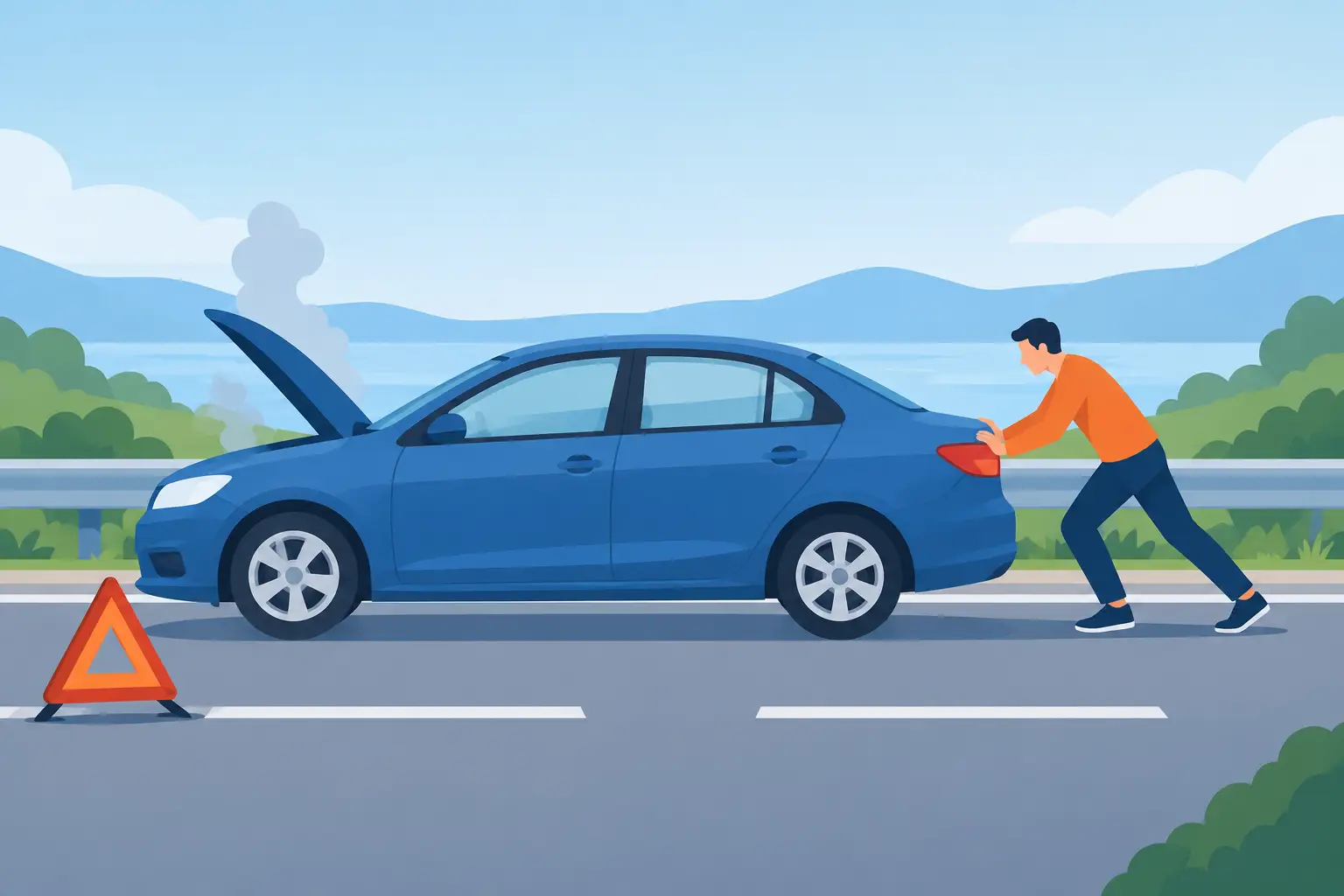
If the vehicle loses power, steer it to the safest available place only if it can be done without putting you or others at risk. On an ordinary road, that may mean a lay-by, side street or a position away from bends, junctions and fast-moving traffic. Put on the hazard warning lights and, when it is safe to do so, switch on sidelights if visibility is poor.
Once stopped, apply the handbrake, select park or neutral as appropriate, and turn the wheels away from the road if you are on a slope. If passengers can leave safely, move them to a secure location well away from traffic. Do not stand beside the vehicle, especially on the offside or in a narrow lane.
Motorways and smart motorways require more caution. If the car remains driveable, leave at the next junction or use an emergency area rather than stopping on the hard shoulder or in a live lane. If you cannot reach a safe place, keep hazard lights on and contact the emergency services if you are in immediate danger. Do not attempt roadside repairs or try to push a vehicle out of a live lane.
A warning triangle can be useful on some quiet roads, but it should never be placed on a motorway. Your safety matters more than marking the vehicle's position.
When to Move a Car After a Breakdown
A vehicle should only be moved under its own power if the fault is understood and driving it will not worsen the problem. For example, a warning light may allow a very short journey to a safer stopping point, but an overheating engine, oil-pressure warning, brake issue or severe vibration is a clear reason to stop. Continuing to drive can turn a recoverable fault into major engine, transmission or braking damage.
If there is smoke, a burning smell, fluid leaking onto the road, damaged tyres, steering problems or accident damage, arrange professional recovery. The same applies if the vehicle will not select gears, has lost power unexpectedly or displays a serious electrical warning. Do not assume that restarting the engine means it is safe to continue.
For prestige, performance, electric and hybrid vehicles, the recovery method is particularly important. These cars may have low ground clearance, complex automatic transmissions, active suspension systems or battery requirements that make conventional towing unsuitable. A poor loading angle or incorrect tow point can cause avoidable damage to bodywork, undertrays, wheels or drivetrain components.
Do Not Rely on a Tow Rope as a Default
Towing a car with a rope is rarely the best response to a breakdown. It requires a competent driver in both vehicles, clear communication, legal roadworthiness and a route that can be completed safely. It is not suitable for a motorway, busy road, vehicle with brake or steering faults, or a car that cannot legally be driven.
Many automatic, four-wheel-drive, electric and hybrid vehicles should not be towed with their driven wheels on the road. Doing so can damage the gearbox, motors or transmission. Even where a manufacturer permits limited towing, there may be strict speed and distance limits. Check the handbook if it is safe to do so, but do not delay getting specialist help in an unsafe location.
A recovery vehicle with the right equipment is the safer option. A flatbed or specialist transporter keeps all four wheels off the road and gives the operator controlled access for loading. This is usually the preferred approach where the car is valuable, lowered, damaged or not fully mobile.
Give the Recovery Operator the Right Information
A fast recovery depends on accurate details. When arranging assistance, state your exact location, the direction of travel and any landmarks or road signs nearby. On a motorway, identify the junction number, emergency area marker or roadside location marker where possible.
Explain what happened before the breakdown, which warning lights are showing, whether the vehicle can roll or steer, and whether it is parked in a safe position. Tell the operator if it is an electric vehicle, hybrid, automatic, four-wheel drive, lowered, modified or fitted with a parking brake that may be locked. These details determine the recovery equipment and loading plan.
It also helps to confirm where the vehicle needs to go. The destination might be a home address, garage, dealership, body shop or secure storage facility. If the garage is closed, leaving a valuable vehicle unsecured outside its gates is not always sensible. Short-term secure storage can provide a controlled holding point until repairs, inspections or insurance arrangements can be made.
Keep any keys, locking wheel-nut tools and relevant vehicle documents accessible, but do not leave personal belongings in the car if it must remain unattended. Take a few clear photographs of the vehicle's condition, particularly after an accident or if it has stopped following contact with a pothole, kerb or debris.
Choose Recovery That Matches the Vehicle
The cheapest option is not always the right one. Standard recovery may be adequate for a straightforward family car with a minor fault, but high-value vehicles demand more care. Low loading ramps, wheel straps, suitable winching equipment and an experienced operator all reduce the risk of damage during collection and transport.
This is especially relevant where a car has flat tyres, locked wheels, damaged suspension or accident damage. It may need skates, dollies or a winch rather than being driven onto a transporter. Attempting to force a damaged vehicle to move can worsen the original problem and complicate repairs.
MHJ Prestige Transport provides 24/7 vehicle recovery and specialist transport for vehicles that need careful, controlled handling across the UK and Europe. For urgent collection, the focus should be on getting the right vehicle and equipment to the scene, then moving the car safely to its next location.
After an Accident, Keep the Vehicle Still Where Possible
A car involved in a collision can have damage that is not obvious at the roadside. Steering alignment, suspension mounts, tyre sidewalls, cooling systems and safety sensors may all be affected. Unless the vehicle is blocking a dangerous position and can be moved safely, avoid driving it away simply because the engine still starts.
Recovery also protects the evidence needed by insurers, repairers and engineers. Photographs, the recovery record and a clear note of the vehicle's condition at collection can all help establish what happened. If the vehicle needs to be held before repair approval, secure storage avoids unnecessary additional movement.
Plan the Next Step, Not Just the Collection
Getting the vehicle off the road is the immediate objective, but it is only the first part of the job. Confirm where repairs will be carried out, whether the garage can accept the vehicle, and how you will collect it once work is complete. For a dealership, collector or business fleet, planned onward transport may be preferable to leaving drivers to make separate arrangements.
A controlled recovery gives you time to make the right repair and transport decisions without exposing the vehicle to further risk. When the car is in a safe place, the pressure lifts and the next move can be made properly.