A damaged prestige vehicle is not simply a recovery job. Low ground clearance, specialist suspension, delicate bodywork and high-value components can turn a routine collection into an expensive problem if the vehicle is moved incorrectly. Knowing how to move damaged prestige vehicles starts with one clear rule: do not attempt to drive, tow or push it until the damage has been assessed.
Whether the vehicle has been involved in an accident, suffered a mechanical failure or cannot be started, the priority is to protect the people at the scene first, then prevent further damage to the vehicle. A suitable recovery plan should account for its condition, drivetrain, location and final destination.
Make the scene safe before arranging recovery
If the vehicle is on a live road, move yourself and any passengers to a safe place where possible. Switch on the hazard lights, use warning equipment only where it is safe to do so, and avoid standing near moving traffic. If there is a fuel leak, smoke, exposed wiring or a damaged battery pack, keep clear and contact the emergency services where required.
Do not try to straighten a wheel, refit loose body panels or restart a vehicle that has sustained a heavy impact. These actions can worsen hidden mechanical damage, affect an insurance claim and create additional risk. For a prestige car, even a short movement with damaged steering, suspension or underbody protection can cause further costly faults.
When arranging collection, give the recovery operator accurate information. Explain whether the vehicle rolls, whether the wheels turn freely, whether it is in a car park or roadside position, and whether it has visible fluid leaks. Photographs are useful, particularly if the vehicle has damage around the wheels, bumpers, sills or underbody.
How to move damaged prestige vehicles without causing more harm
The right method depends on the damage. A vehicle with minor cosmetic damage and four freely moving wheels may be loaded in a straightforward manner. A vehicle with collision damage, a locked wheel, a failed air suspension system or a compromised drivetrain needs a more controlled approach.
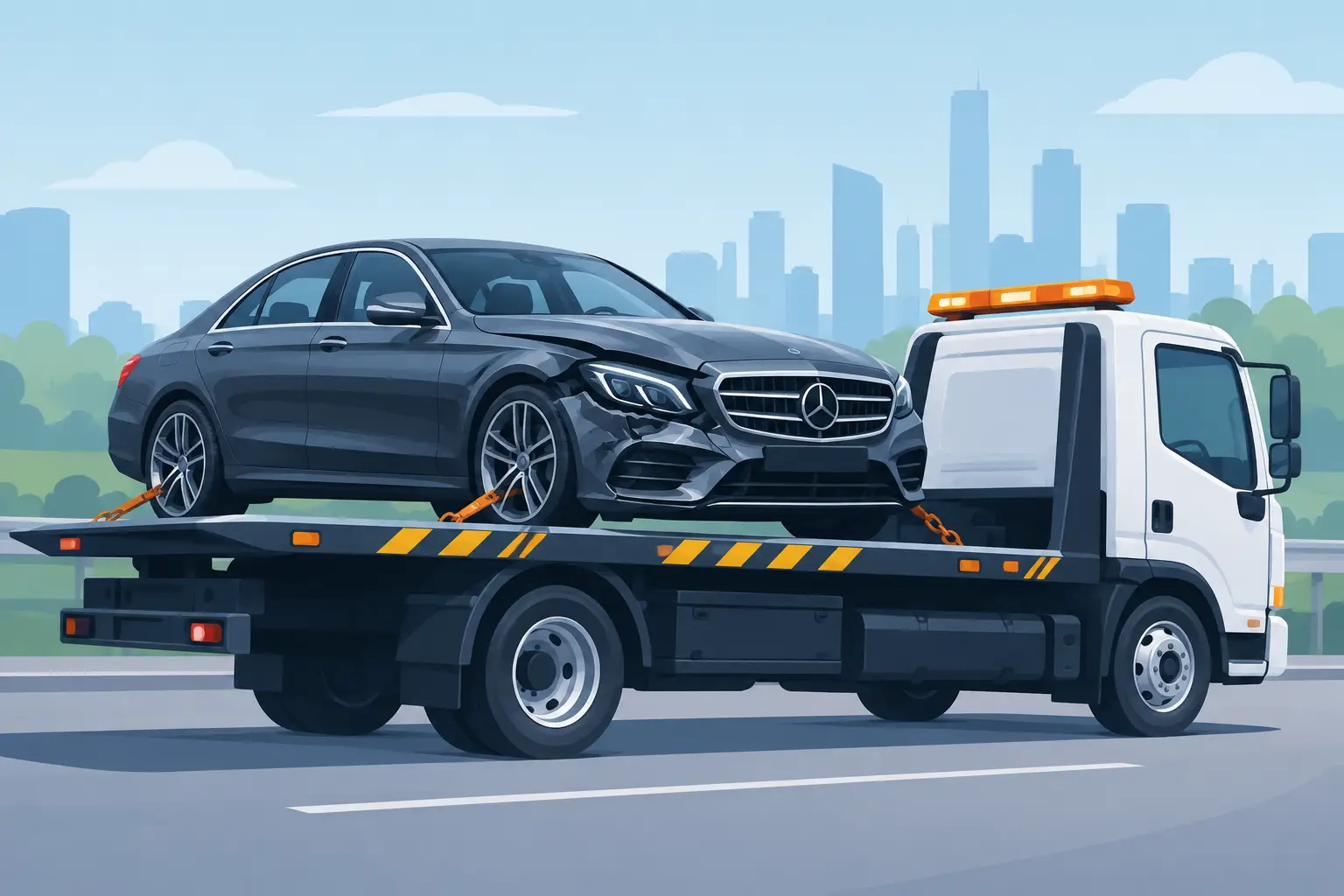
A flatbed recovery vehicle is generally the safest option because all four wheels can be carried off the ground. This removes the risk of drivetrain damage associated with conventional towing and gives the operator better control during loading. Winching should be carried out carefully, using suitable attachment points and protection where needed to avoid damaging the bumper, splitter, suspension or chassis.
Low-loading equipment matters for prestige vehicles. Many sports cars, supercars and modified vehicles have limited clearance, so steep ramps can scrape front splitters, exhaust systems or undertrays. A professional operator will assess the loading angle and use the appropriate equipment to reduce the risk of contact.
Do not assume it can be towed with a rope or bar
Rope towing is unsuitable for a damaged prestige vehicle. It provides little control, puts strain on the towing points and can be unsafe if brakes, steering or lighting are affected. It may also be prohibited on certain roads or inappropriate for the vehicle’s condition.
Tow bars and dollies are not automatically safe alternatives. If the driven wheels remain on the road, an automatic gearbox, differential, transfer box or electric drive system may be damaged. The vehicle handbook may set out specific emergency towing procedures, but these are not a substitute for proper recovery after an accident or significant fault.
Tell the recovery provider about the drivetrain and vehicle type
Prestige vehicles vary widely in how they should be handled. Four-wheel-drive models, performance automatics, electric vehicles and cars with air suspension each present different requirements. Giving the correct vehicle details before collection allows the recovery team to arrive prepared.
For four-wheel-drive and all-wheel-drive vehicles, carrying the entire vehicle is usually the preferred option. Allowing one axle to turn while the other remains stationary can place unwanted load on drivetrain components. This is especially relevant where the vehicle cannot select neutral or has damage that prevents normal operation.
Electric and hybrid vehicles require additional care. A collision can affect the high-voltage battery, cabling or cooling systems, even where no obvious damage is visible. The vehicle should not be handled as an ordinary breakdown if there are warning messages, battery damage, heat, smoke or signs of water ingress. The recovery provider needs to know it is an EV or hybrid before attending.
Vehicles with air suspension may sit unusually low after a fault or impact. Attempting to drive them onto ramps can damage the underside. Controlled winching and suitable loading aids are often the safer answer.
Protect the vehicle during loading and transport
Damage does not stop once a car is on the recovery bed. Poor restraint can mark alloy wheels, stress suspension components or allow movement during transport. The vehicle should be secured using appropriate wheel restraints and checked before departure, rather than relying on improvised straps or unsuitable attachment points.
Loose parts need attention too. Damaged bumpers, splitters, undertrays and trim panels can detach in transit. Where safe, these should be secured or documented before movement. If a part cannot be made safe, the recovery operator may need to adapt the loading plan or arrange onward transport accordingly.
Take clear photographs before loading, including the vehicle’s overall condition, registration, mileage where visible and existing damage. This protects everyone involved by creating an accurate record of the vehicle’s condition at handover. If the vehicle belongs to a dealership, insurer, garage or business fleet, confirm who is authorised to approve the destination and any storage arrangements.
Choose the right destination after recovery
The nearest location is not always the best destination. Depending on the circumstances, the vehicle may need to go to a bodyshop, dealership, specialist garage, insurer-approved repairer, home address or secure storage facility.
If liability or repair authority has not yet been agreed, secure storage can prevent the vehicle being left exposed at a roadside compound or unsuitable location. This is particularly relevant for prestige cars, where keys, personal possessions, specialist parts and vehicle security need careful management.
Before the vehicle is moved, confirm the full address, opening hours and whether the receiving site can accept a non-running car. A closed workshop or inaccessible compound can result in unnecessary handling and additional cost. For cross-country or European movements, establish the collection and delivery requirements early, including vehicle documents, keys and contact details at both ends.
What to look for in a prestige vehicle recovery service
Price matters, but the lowest quote can become costly if the operator arrives with unsuitable equipment or lacks experience of low, damaged or high-value cars. Ask practical questions about the recovery method, not just availability.
A suitable provider should be able to explain how the vehicle will be loaded, whether a flatbed is being used, how low-clearance vehicles are managed and what happens if the vehicle cannot roll. They should also be clear about collection times, destination options and secure storage where needed.
For urgent incidents, 24/7 availability is valuable, but communication is equally important. You should know who is attending, what information they need and where the vehicle will be taken. MHJ Prestige Transport supports roadside recovery, planned specialist transport and secure short-term storage for customers who need a controlled response rather than basic removal.
Keep the paperwork and keys under control
After an accident or breakdown, it is easy for small details to be missed. Keep the vehicle keys, locking wheel nut key, service records and any insurer reference together where possible. Tell the recovery team if the car has a tracker, immobiliser issue, alarm fault or keyless system that may affect loading or handover.
Remove valuables if it is safe to do so, but do not compromise your safety to retrieve items from a dangerous roadside position. Make a note of any belongings left inside the vehicle and retain recovery paperwork, photographs and contact details. These records can make the repair, insurance and storage process far easier to manage.
A damaged prestige vehicle deserves a recovery plan that reflects its value and condition. Give clear information, avoid improvised towing, and use a provider equipped to collect it safely from the first attempt.