A breakdown rarely happens at a convenient time. It is usually late, raining, on a hard shoulder, outside a garage that has just closed, or halfway through a journey you could not afford to delay. When you search for a recovery car near me, you are not looking for clever marketing. You are looking for a service that answers quickly, turns up when promised, and handles your vehicle properly.
That matters even more when the vehicle is high value, low clearance, non-running after an accident, or already part of a planned transport move. In those situations, the difference between a basic tow and a professional recovery operation is not small. It affects safety, timing, damage risk, storage options, and how much confidence you have in the next step.
What a recovery service should actually provide
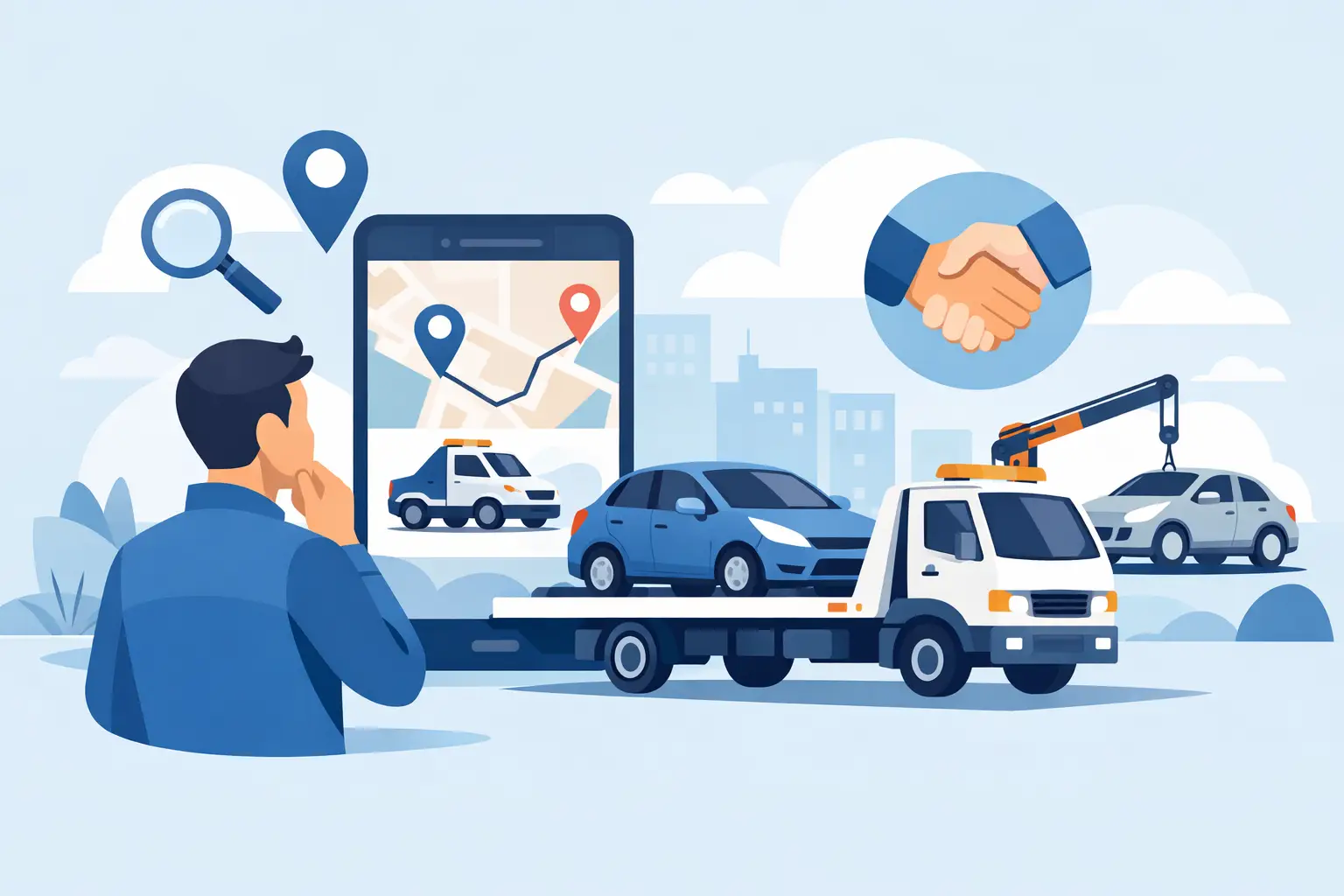
A proper recovery service is more than moving a broken vehicle from one place to another. The job starts with assessing where the vehicle is, what condition it is in, whether it can roll, whether specialist loading is needed, and where it needs to go. That might be your home, a garage, a bodyshop, a dealership, or secure storage.
For many motorists, speed is the first concern. That is understandable, but speed without control is not enough. A reliable operator should be able to give you clear arrival expectations, ask the right questions about the vehicle, and explain what happens once the car is collected. If they cannot do that at the first point of contact, it is often a sign the service may be less organised than you need.
For prestige, performance, and collector vehicles, the standard needs to be higher again. Ground clearance, wheel size, bodywork condition, and loading angle all matter. The wrong equipment or rushed handling can create fresh damage after the original problem has already disrupted your day.
Searching for a recovery car near me in an urgent situation
In an emergency, most people make decisions fast. That is normal, but it helps to know what to listen for when you call. A good provider will want the exact location, vehicle make and model, the fault or accident condition, whether the keys are available, and whether the vehicle is safe to access. They should also ask where the vehicle needs to be taken and whether onward storage may be required.
This is not unnecessary admin. It is how a serious operator sends the right vehicle, the right equipment, and the right plan. A hatchback with a flat battery is one type of job. A prestige saloon with suspension damage after a collision is another. If a company treats both jobs as basically the same, that should give you pause.
There is also the issue of roadside conditions. Recovery from a driveway is straightforward compared with recovery from a multi-storey car park, a narrow lane, or a live roadside environment. Access restrictions, traffic conditions, and vehicle damage all affect the method. That is why the nearest option is not always the best option. The better question is whether the operator can manage your specific job safely and without delay.
What to look for beyond location
A local result may feel reassuring, but proximity alone does not guarantee a good outcome. Response capability matters more than a postcode on a map. Some operators cover large areas efficiently, while others are technically nearby but limited in vehicle type, hours, or equipment.
The first thing to check is availability. If you need help now, 24/7 means exactly that. Not a voicemail. Not a message saying someone will call back in the morning. If your car is stranded overnight or after an accident, the service must be ready to respond outside normal business hours.
The second is vehicle suitability. Flatbed recovery is often the safer option for modern vehicles and is especially important for prestige and damaged cars. It reduces the risk that comes with dragging or towing a vehicle that should really be fully lifted and secured.
The third is handling standards. If the vehicle is valuable, recently repaired, modified, or simply important to you, ask how it will be loaded and secured. A professional answer should be clear and confident, not vague.
Why prestige and specialist vehicles need more care
Not every recovery operator is set up for prestige transport. That is not criticism. It is simply a fact of the market. General recovery services are built to move volume efficiently, and many do that well. But a prestige, classic, sports, or collector vehicle often needs a different level of attention.
Low approach angles can make loading difficult. Large alloys and performance tyres need proper strapping points. Vehicles with body kits, splitters, or limited ground clearance cannot be treated like standard saloons. Even where the mechanical issue is minor, poor loading can create expensive cosmetic damage.
This is where specialist experience matters. The operator should understand how to assess clearance, how to load non-runners carefully, and how to secure the vehicle without creating pressure on vulnerable components. If storage is needed after recovery, secure holding also becomes part of the service, not an afterthought.
For dealerships, collectors, garages, and insurers, this is often the deciding factor. They are not just paying for movement. They are paying for controlled handling from collection to delivery.
Planned transport and emergency recovery often overlap
People often think of recovery as something that only happens after a breakdown. In practice, there is a lot of overlap between emergency work and planned logistics. A vehicle may break down far from home and need to be moved into secure storage before onward delivery is arranged. A newly purchased prestige vehicle may need transport because it is not taxed, not insured for road use, or not suitable for a long-distance drive. An accident-damaged car may need collection first, assessment second, and relocation later.
That is why it helps to work with a provider that can manage more than one stage. Recovery, transport, and short-term secure storage are often linked. If each stage is handled separately by different firms, communication slows down and responsibility can become unclear.
A service-led operator with both recovery and specialist transport capability can simplify that process. That is especially useful when timing matters or the vehicle cannot be left exposed.
Questions worth asking before you confirm
If you have time to ask a few direct questions, do it. Ask how soon they can attend. Ask whether the vehicle will be recovered on a flatbed. Ask how they handle non-running or accident-damaged cars. Ask where the vehicle can be taken if your chosen destination is closed. Ask whether secure storage is available if needed.
None of this is overcautious. It is practical. A recovery job tends to go well when expectations are set clearly from the start.
Price will matter, of course, but the cheapest quote is not always the cheapest outcome. If poor handling causes further damage, or if delays leave you arranging storage and onward transport separately, the apparent saving disappears quickly. For high-value vehicles, that risk is even harder to justify.
Recovery car near me - what good service feels like
A good recovery experience is calm, clear, and well managed. You know who is coming, roughly when they will arrive, and what will happen once the vehicle is loaded. You are not left chasing updates. You are not wondering whether the car is being handled properly. You are not trying to solve the next problem before the first one is even under control.
That level of service matters for everyday motorists and even more for owners of prestige vehicles. The right provider brings urgency when urgency is needed, but without cutting corners. They understand that recovery is not just about getting a car off the road. It is about protecting the vehicle, reducing disruption, and moving the situation forward properly.
MHJ Prestige Transport operates in exactly that space, combining roadside response with specialist vehicle handling, transport support, and secure storage when the job requires more than a basic pickup.
If you are searching for a recovery car near me, the most useful step is to look past the search result itself and focus on capability. The right recovery partner should leave you with one less problem, not several new ones.