
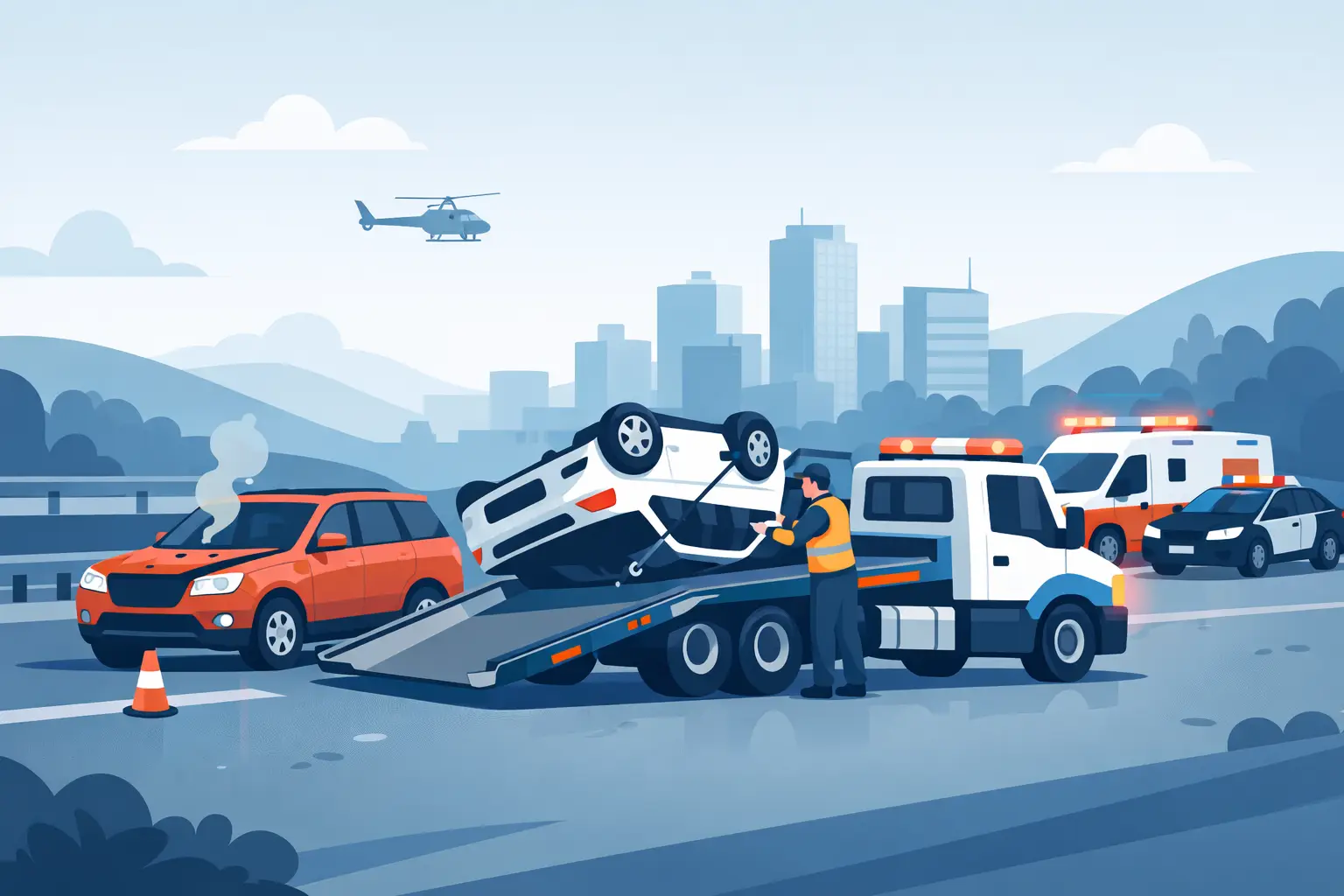
A breakdown on the hard shoulder, a failed start outside your home, or accident damage that leaves the car undriveable all create the same problem - you need the right help quickly, and you need to know your vehicle is in safe hands. If you are looking for how to arrange emergency vehicle recovery, the process is straightforward when you know what information to give and what to expect from the recovery operator.
The first priority is safety. If the vehicle has stopped in a live lane, on a fast road, or in a position that puts you or other road users at risk, move to a safe place if you can do so without danger. Switch on your hazard lights, exit the vehicle when appropriate, and follow normal roadside safety guidance for your location. Once everyone is safe, you can focus on arranging recovery properly rather than making rushed decisions.
How to arrange emergency vehicle recovery without delays
The fastest recoveries usually begin with a clear phone call. Recovery providers need accurate details to send the right vehicle, equipment, and operator first time. If key information is missing, delays can follow, especially where a prestige, low-clearance, non-runner, or accident-damaged vehicle is involved.
When you call, be ready to give your exact location, the registration number, the make and model, and a simple description of the issue. Say whether the vehicle has broken down, been involved in an accident, lost a wheel, suffered tyre damage, has electrical failure, or will not start. It also helps to explain whether the steering, brakes, or gearbox are functioning, because that affects how the vehicle can be loaded.
If you are on a motorway or A-road, location accuracy matters. A rough guess is not enough. Use marker posts, junction numbers, nearby services, road names, or your phone location. In urban areas, a postcode is useful, but adding a landmark, business name, or street position often saves time.
The details a recovery operator needs
A good recovery company will ask focused questions, and there is a reason for each one. They are not slowing the job down. They are making sure the correct recovery vehicle arrives.
You should expect to provide the number of passengers, whether there are pets, whether the car is in a car park with height restrictions, and whether access is tight or gated. If the vehicle is a prestige car, modified vehicle, electric vehicle, or something with very low ground clearance, say so early. Those details change the loading plan.
If the vehicle has been in a collision, mention visible damage to wheels, suspension, bodywork, glass, or underbody. A car with locked wheels or broken steering may need specialist handling rather than a basic tow. This is one of the main differences between general roadside collection and specialist recovery.
Choosing the right recovery service
Not every recovery provider offers the same level of service. If you drive a standard runabout with a simple mechanical fault, many operators may be suitable. If you drive a prestige vehicle, performance car, classic, dealer stock vehicle, or accident-damaged vehicle, the choice matters more.
The lowest quote is not always the safest option. A cheaper operator may still do a competent job, but if the vehicle requires careful loading, soft strapping, low-angle access, or secure onward storage, experience becomes more important than price alone. Recovery is not just about getting the vehicle off the road. It is about getting it moved without adding damage.
This is where a specialist provider can make the process easier. A business such as MHJ Prestige Transport is set up for urgent recovery as well as careful transport, which is particularly relevant when the vehicle involved has high value or specific handling requirements.
Ask where the vehicle is going
Before recovery is dispatched, confirm the destination. In some cases, you will want the vehicle taken home. In others, it will need to go to a garage, bodyshop, dealership, insurer-approved repairer, or secure storage site.
That decision depends on the situation. A simple non-start might go to your local garage. Accident damage may need an insurer-led route. A prestige or specialist vehicle may be better placed into secure storage until repair instructions are agreed. Clarifying this at the start avoids a second movement later, which can mean more time, more cost, and more handling.
What happens after you book emergency recovery
Once the recovery is arranged, the provider should give you an estimated arrival time and explain any immediate instructions. If conditions change - for example, traffic worsens, police close a lane, or access is restricted - the arrival window may move. That is normal in emergency logistics.
When the operator arrives, they will assess the vehicle before loading. This is not a formality. It allows them to confirm damage, identify loading risks, and choose the safest method. For prestige and performance vehicles, loading angle, ramp clearance, and wheel security are especially important.
If the car still starts or rolls, that does not automatically mean it should be driven or winched casually onto the bed. After an accident or mechanical issue, hidden damage can make movement risky. A controlled loading process is often the safer option.
Documents and practical points to have ready
You do not need a folder of paperwork at the roadside, but a few basics help. Keep your phone available, have your registration details ready, and make sure you can confirm where the vehicle is being taken. If someone else owns the vehicle, say so. If it is a company car, lease vehicle, or dealership unit, mention that early because collection and delivery instructions may differ.
Remove valuables if it is safe to do so. If the vehicle is being taken for inspection or storage, it is sensible to photograph it before transport. That is not about expecting problems. It is just good practice when a vehicle is being moved after a breakdown or collision.
How recovery differs for prestige and specialist vehicles
A standard recovery job and a prestige vehicle recovery can look similar from the roadside, but the handling requirements are often very different. Low splitters, wide wheels, sensitive bodywork, specialist jacking points, carbon components, and modified suspension all affect how the vehicle should be loaded.
That is why it helps to mention the vehicle type at the start rather than assuming the operator will manage it on arrival. Most professional recovery teams will adapt, but specialist preparation reduces risk. It also avoids sending a vehicle that is unsuitable for low-clearance or high-value transport.
Electric vehicles are another example. Recovery is still straightforward, but the operator needs to know what they are dealing with. Battery-related faults, restricted drive modes, and manufacturer handling guidance can all affect the job. The same applies to classics, where age and fragility may matter more than outright value.
Common mistakes when arranging emergency vehicle recovery
The biggest mistake is waiting too long to call. Drivers sometimes hope a warning light will clear, a flat battery will restart, or a damaged tyre will somehow hold out. If the vehicle is unsafe or clearly not roadworthy, delaying the call usually makes the situation harder.
Another common issue is giving incomplete information. Saying the car has broken down is not enough if the front wheel is collapsed, the steering is locked, or the vehicle is stuck in an underground car park. Clear details help the recovery team arrive prepared.
It is also worth being careful about destination decisions made under pressure. If you are tired, shaken, or dealing with accident stress, it can be tempting to send the car to the nearest available site. Sometimes that is the right call. Sometimes secure storage or direct delivery to a trusted repairer is the better move. It depends on the vehicle, the damage, the time of day, and what needs to happen next.
How to make the process smoother
The simplest way to improve the outcome is to stay clear and factual. Give the location, explain the fault, describe the vehicle, and confirm the destination. If there are access issues, say so. If the car is valuable, modified, or damaged in a way that affects loading, say that too.
A good recovery provider will take control of the practical side from there. You should not need to work out loading methods, route planning, or what equipment is required. That is the operator's job. Your role is to provide accurate information early so the job can be handled properly from the outset.
When recovery is arranged well, the service feels calm even when the situation is not. That is the standard worth looking for - quick response, clear communication, safe handling, and a plan for where the vehicle goes next.
If you ever need to arrange emergency vehicle recovery, focus on two things first: your safety and the quality of the operator you call. The right response does more than remove the vehicle from the roadside - it protects what happens to it afterwards.