
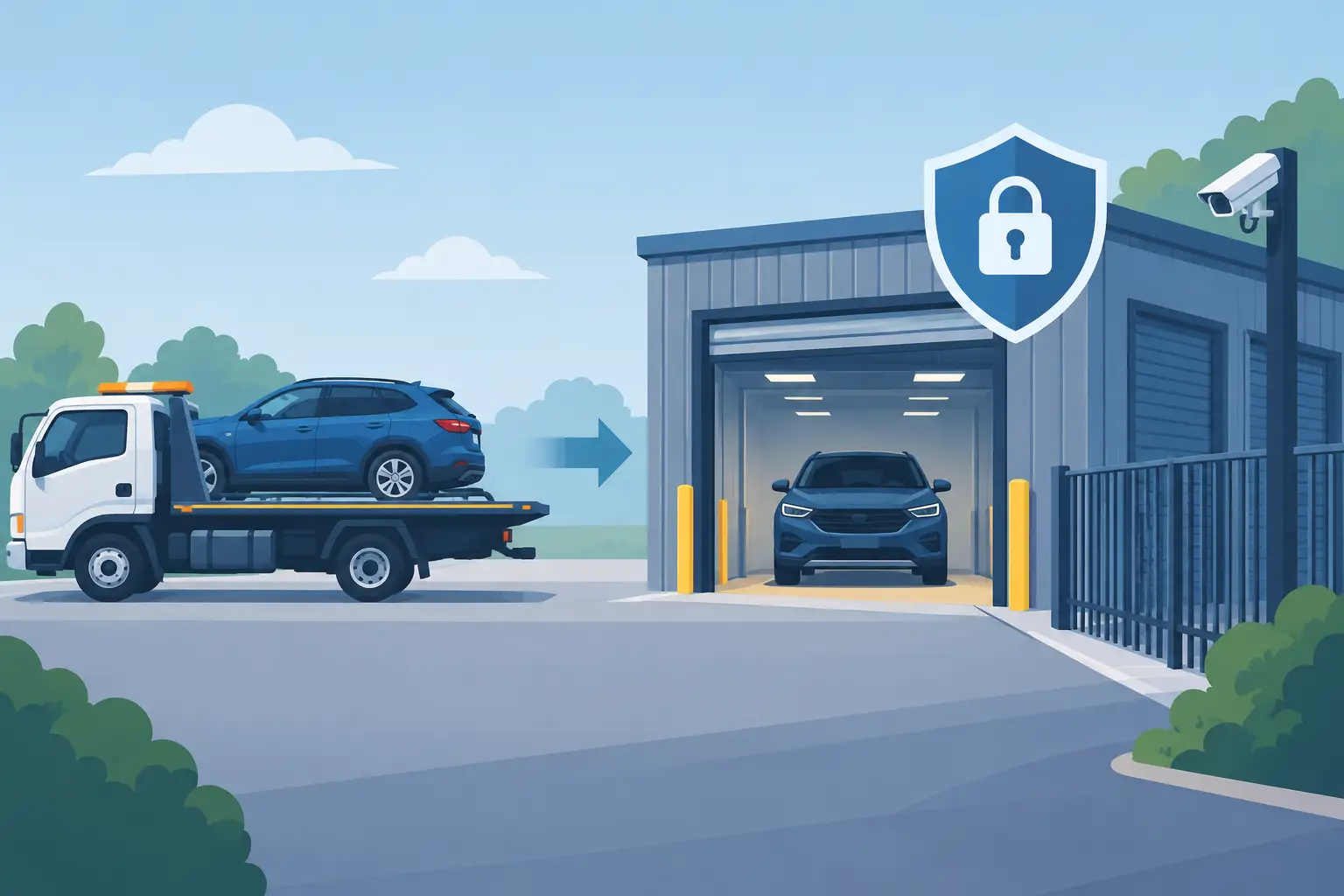
A breakdown, collision or failed journey can leave you with a vehicle that cannot be driven and nowhere appropriate to keep it. Knowing how secure vehicle storage works helps you make the right decision quickly, especially where a prestige, classic or otherwise valuable vehicle is involved.
Secure storage is not simply parking a recovered vehicle behind a gate. It is a controlled process that starts at collection, records the vehicle’s condition, limits access and keeps the car ready for repair, inspection, collection or onward transport. The exact arrangement depends on the reason for recovery, the vehicle’s condition and how long it needs to remain off the road.
From recovery location to secure storage
The process usually begins when the vehicle is collected. This may be from the roadside, a collision scene, a garage, a home address or a dealership. Before loading, the recovery operator should establish whether the vehicle is safe to move, whether it has damage that affects loading, and whether there are any special requirements.
For a non-running vehicle, careful loading matters as much as the storage location itself. Low-clearance prestige cars, vehicles with accident damage, locked wheels or transmission faults may require specialist equipment and a considered approach. The aim is to avoid creating further damage while getting the vehicle safely away from an exposed or inconvenient location.
Once loaded, the vehicle is taken directly to the storage site rather than being left in an unsecured lay-by, public car park or residential street. For an owner dealing with an accident or mechanical failure, this removes an immediate concern and creates time to decide what happens next.
What happens when the vehicle arrives
On arrival, the vehicle should be checked in and its position recorded. A professional storage process creates a clear chain of custody: when the vehicle was received, its visible condition, its registration details and any instructions relating to repair, insurer assessment or collection.
Condition reporting is particularly useful after an accident. Existing damage can be documented before the vehicle is stored, which gives the owner, insurer, repairer and recovery provider a reliable starting point. Personal belongings, keys and vehicle documents may also need to be recorded and managed carefully.
The vehicle is then placed in an appropriate area. A car awaiting collection may only need short-term secure holding, while an accident-damaged vehicle could require a longer stay pending assessment. A vehicle with fluid leaks, electrical concerns or severe impact damage may need to be positioned separately from routine storage. The right provider will assess the practical risks rather than treating every vehicle in the same way.
Security is more than a locked gate
A locked compound is a basic requirement, not the full definition of secure vehicle storage. Effective protection comes from controlled entry, restricted vehicle movement, clear records and regular oversight of the site. The purpose is to reduce the risk of unauthorised access, theft, vandalism and confusion over who is permitted to collect or inspect a vehicle.
Access should be managed so that vehicles are not released to an unknown person simply because they have keys or know the registration number. Ownership, authority to collect and any insurer or finance requirements may need to be confirmed first. This is especially relevant following an accident, where several parties may be involved and instructions can change quickly.
For high-value vehicles, discretion matters too. A prestige car should not be left in a location where it attracts unnecessary attention or is exposed to casual public access. Storage gives owners and businesses a controlled holding point while transport, repair or delivery arrangements are made.
Indoor and outdoor storage: choosing the right option
Not every vehicle needs indoor storage, and not every storage provider has a covered facility available at short notice. The right choice depends on the vehicle, its condition, its value and the expected storage period.
Outdoor secure storage can be suitable for many short-term recovery situations, particularly where a vehicle is awaiting collection, inspection or transport to a repairer. The key considerations are site security, surface quality, space around the vehicle and controlled access. A secure, well-managed compound is generally far preferable to leaving a disabled car at the roadside or in an open public area.
Covered or indoor storage can be more suitable for classic, prestige and collector vehicles, as well as cars being held for a longer period. It offers greater protection from weather, debris and repeated exposure to the elements. However, availability may be limited, and it can cost more. It is worth discussing the level of protection needed rather than automatically paying for a service that does not match the circumstances.
Keeping the vehicle ready for its next move
Storage is usually a temporary part of a wider plan. The vehicle may need to go to a bodyshop, dealer, garage, insurer-appointed repairer, auction, home address or another destination in the UK or Europe. Clear communication at this stage avoids unnecessary delays and repeat handling.
If a repairer is not yet confirmed, secure storage gives the owner breathing space. There is no need to rush a damaged vehicle into the first available garage or leave it somewhere unsuitable while decisions are made. Dealerships and fleet operators can also use storage to manage timing when workshop capacity, handover dates or onward transport do not align.
A specialist transport provider can arrange the next movement once instructions are confirmed. For prestige vehicles, this should include suitable loading methods, appropriate restraints and careful planning around ground clearance, wheel condition and any accident damage. Moving a vehicle several times unnecessarily increases the chance of avoidable issues, so a joined-up recovery, storage and delivery service has practical value.
Storage after an accident
After a collision, the priority is often safety rather than convenience. A damaged vehicle may be blocking a road, cannot be driven legally or has sustained faults that are not immediately visible. Recovering it to secure storage removes it from the scene and provides a controlled location while the next steps are agreed.
Owners should take note of where the vehicle is being stored, who holds the keys and how release will be authorised. If an insurer is involved, provide the storage details promptly and keep any reference numbers, recovery paperwork and condition report. If the vehicle contains personal property, ask how it can be accessed and whether an appointment is required.
Do not assume that a vehicle should be driven away after a minor-looking impact. Damage to steering, suspension, tyres, lights or safety systems can make it unsafe. A professional recovery assessment can help determine whether transport and storage are the sensible option.
Questions to ask before agreeing to storage
When time is limited, a few direct questions will help establish whether the arrangement is suitable. Ask where the vehicle will be kept, how access is controlled, whether its condition will be recorded on arrival and how collection or onward delivery is authorised. You should also confirm the daily storage charge, any recovery or release fees, and whether the provider can transport the vehicle to its next destination.
For a prestige, classic or modified vehicle, explain any handling requirements before collection. Mention low suspension, limited ground clearance, non-standard wheels, immobiliser issues, battery isolation, transport mode settings or existing damage. These details allow the recovery team to arrive with the right equipment and plan the move properly.
A practical option when plans change
Secure vehicle storage is valuable because it creates order at a point when the situation is often uncertain. Whether your car has broken down on a long journey, been involved in an accident or needs holding between collection and delivery, it provides a protected place while the correct next move is arranged.
MHJ Prestige Transport provides 24/7 recovery, careful vehicle handling and short-term secure storage for customers who need a dependable response. If your vehicle cannot stay where it is, arranging safe recovery and controlled storage promptly is often the simplest way to protect it and keep your options open.