
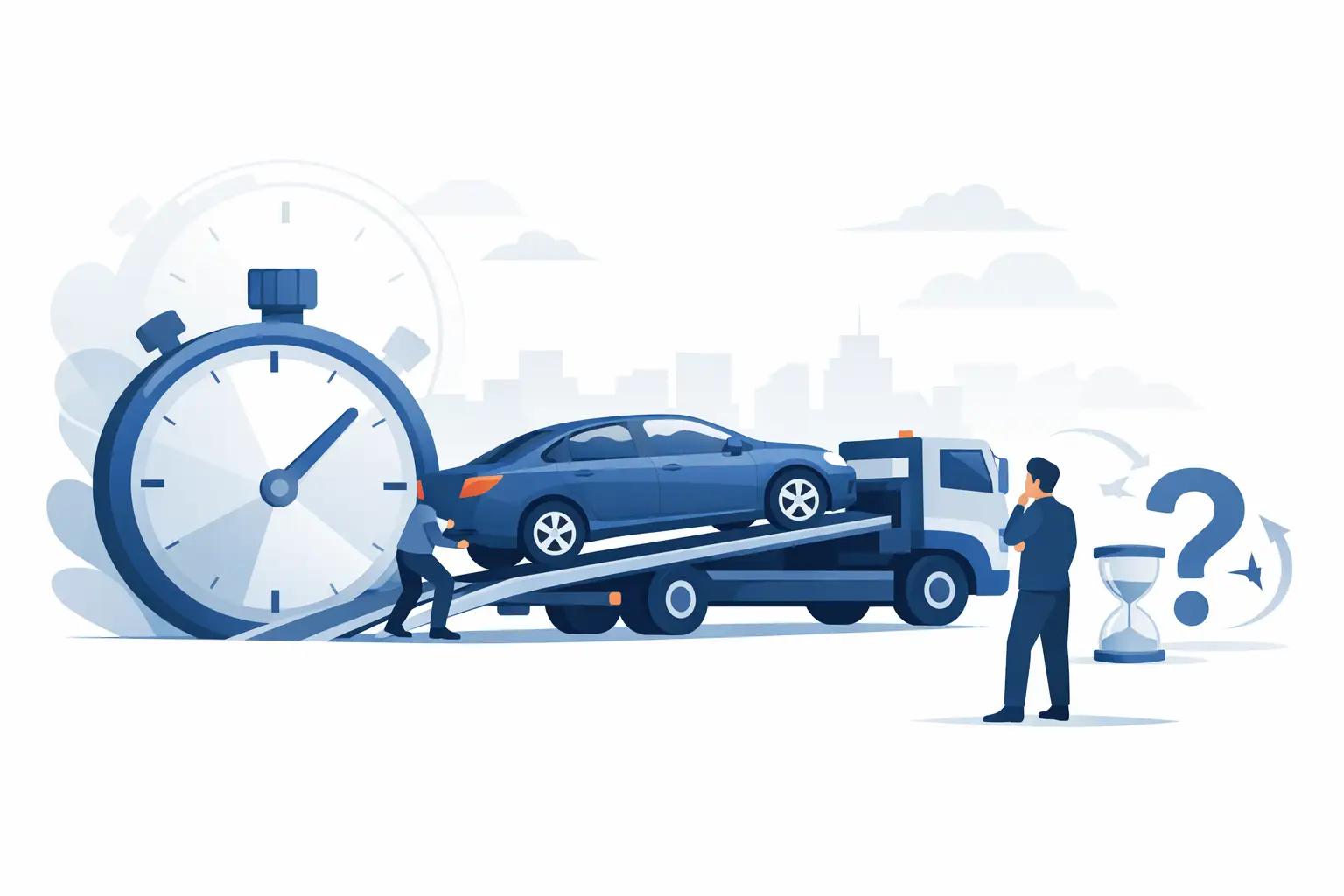
A breakdown on a live road, a non-starting vehicle on a driveway, or accident damage outside normal hours all raise the same question straight away - how long does car recovery take? The honest answer is that recovery time is rarely one fixed number. It depends on where the vehicle is, what condition it is in, what type of vehicle needs moving, and how far it needs to go.
For most motorists, the wait has two parts. First, there is the time it takes for the recovery vehicle to reach you. Second, there is the time needed to load, secure and transport your vehicle to its destination. If you are dealing with a prestige car, a lowered vehicle, accident damage or a difficult roadside position, those timings can change because careful handling matters as much as speed.
How long does car recovery take in real terms?
In straightforward cases, roadside attendance can be relatively quick if a recovery operator is already working nearby and road conditions are clear. In busier periods, in rural areas or on routes with traffic disruption, the wait can be longer. Once the recovery vehicle arrives, loading may take only a short time for a standard breakdown, but it can take longer if the car is immobile, locked, damaged or needs specialist equipment.
The transport stage is just as variable. A vehicle going a few miles to a local garage is very different from one being moved across the country or into secure storage. If the destination is nearby and access is easy, the full process can be completed quite quickly. If the car needs to be taken a significant distance, timing naturally extends.
That is why any recovery company giving a serious answer should avoid promising a blanket figure. A realistic estimate matters more than an optimistic one that does not account for the job properly.
What affects how long car recovery takes?
The biggest factor is location. A vehicle in a town or city with strong route access is usually easier to reach than one on a rural lane, in a remote area or on a motorway hard shoulder with traffic restrictions around it. Urban jobs can still be delayed, of course, especially in rush hour or where roadworks create bottlenecks.
Vehicle condition also matters. A car that will roll and steer is usually simpler to load than one with accident damage, wheel damage, suspension failure or a seized transmission. If the vehicle is in a vulnerable position, extra time may be needed to recover it safely rather than simply quickly.
The type of vehicle matters more than many people expect. Standard hatchbacks and saloons are one thing. Prestige vehicles, performance cars and low-clearance models often need more controlled loading angles, greater care around splitters and sills, and correct securing methods. That care is not delay for the sake of it. It is what protects the vehicle during recovery.
Distance to destination is another obvious factor, but it is not the only transport issue. Access at the delivery point can slow things down too. A busy garage yard, restricted city street, underground car park or private property with limited turning space may all add time at the final stage.
From call-out to collection
When customers ask how long does car recovery take, they are often really asking how quickly help can be organised from the first call. The speed of that process depends partly on the information provided at the start. Clear details save time.
If you can give the exact location, vehicle make and model, the nature of the fault or damage, whether the car rolls and steers, and where it needs to go, the operator can assess the right recovery method from the outset. If that information only becomes clear on arrival, the job can take longer because the vehicle or route may require a different setup than first expected.
This is particularly relevant for prestige and specialist vehicles. A high-value car should not be treated like a basic roadside tow. Proper planning, the right equipment and secure handling are part of the service, and they often prevent the kind of mistakes that create bigger delays later.
Breakdown recovery versus accident recovery
A routine breakdown is usually the quicker scenario. If the vehicle is parked safely, can be accessed easily and has no structural damage, loading tends to be more straightforward. Flat battery, mechanical fault, engine issue or non-starting vehicle jobs often move faster than collision work.
Accident recovery is different. The vehicle may be blocking a road, have damaged wheels, locked steering, deployed airbags or bodywork contact points that make loading more delicate. There may also be police involvement, traffic management, or the need to coordinate with a garage, insurer or storage site. In those situations, speed still matters, but safe removal is the priority.
Why prestige vehicles can take a little longer
Owners of prestige, performance and collector vehicles often expect a recovery provider to work more carefully, and rightly so. Lower ride heights, wider bodywork, specialist tyres and sensitive paint finishes all require a more controlled approach. Even small loading errors can cause avoidable damage.
That means the recovery process may take a little longer than it would for a standard vehicle. The difference is usually in setup and securing rather than in basic travel time. It is time well spent if it protects the vehicle. A professional operator should be able to explain that clearly rather than rush a valuable car onto a lorry in a way that creates risk.
For that reason, businesses such as MHJ Prestige Transport are often chosen not simply for availability but for the way they manage the vehicle once they arrive.
What can delay a recovery job?
Traffic is the most obvious issue, but not the only one. Poor weather can slow attendance and loading, especially in heavy rain, ice or snow. Access problems are common too. Vehicles blocked in on private property, stuck in multi-storey car parks, or positioned on narrow roads can take longer to recover safely.
Incomplete information can also create unnecessary delay. If a caller says the vehicle is mobile but it turns out to have major suspension damage, the planned recovery method may need to change. The same applies if the destination changes halfway through the job or if there is no one available to hand over the vehicle at the drop-off point.
Timing can also vary by demand. Nights, weekends and peak breakdown periods do not stop professional recovery services operating, but they can affect how quickly a lorry reaches a particular job, especially if several urgent incidents occur at once in the same region.
How to help the recovery go faster
The simplest way to reduce delay is to be precise from the first call. Share the exact location, not just the nearest town. Mention whether the car is in traffic, on a driveway, in a car park or in a restricted access area. Say clearly if the wheels are damaged, if the steering is locked, or if the car sits very low.
It also helps to have the destination confirmed before collection. If you need the vehicle taken to a garage, your home address, a dealership or secure storage, give those details early so the route can be planned properly. Keep your phone available in case the driver needs to confirm access or arrival arrangements.
If the vehicle contains valuables or specialist instructions apply, raise that before loading begins. Small details sorted early tend to save much more time than they take.
A realistic expectation matters more than a quick promise
People usually want a short answer to how long does car recovery take, but the better question is whether the recovery is being handled properly. A rushed arrival estimate that slips by hours is less useful than a clear, realistic timescale based on the actual job. The same applies to loading and transport.
Good recovery operators balance urgency with control. They understand that a stranded motorist needs prompt help, but they also know that damaged, prestige or specialist vehicles cannot be handled carelessly just to shave a few minutes off the process. That balance is what turns a stressful incident into a managed one.
If you need recovery, the most useful next step is not guessing a universal timeframe. It is speaking to a provider that can assess your exact location, vehicle and destination, then give you a practical estimate based on real conditions at that moment.