
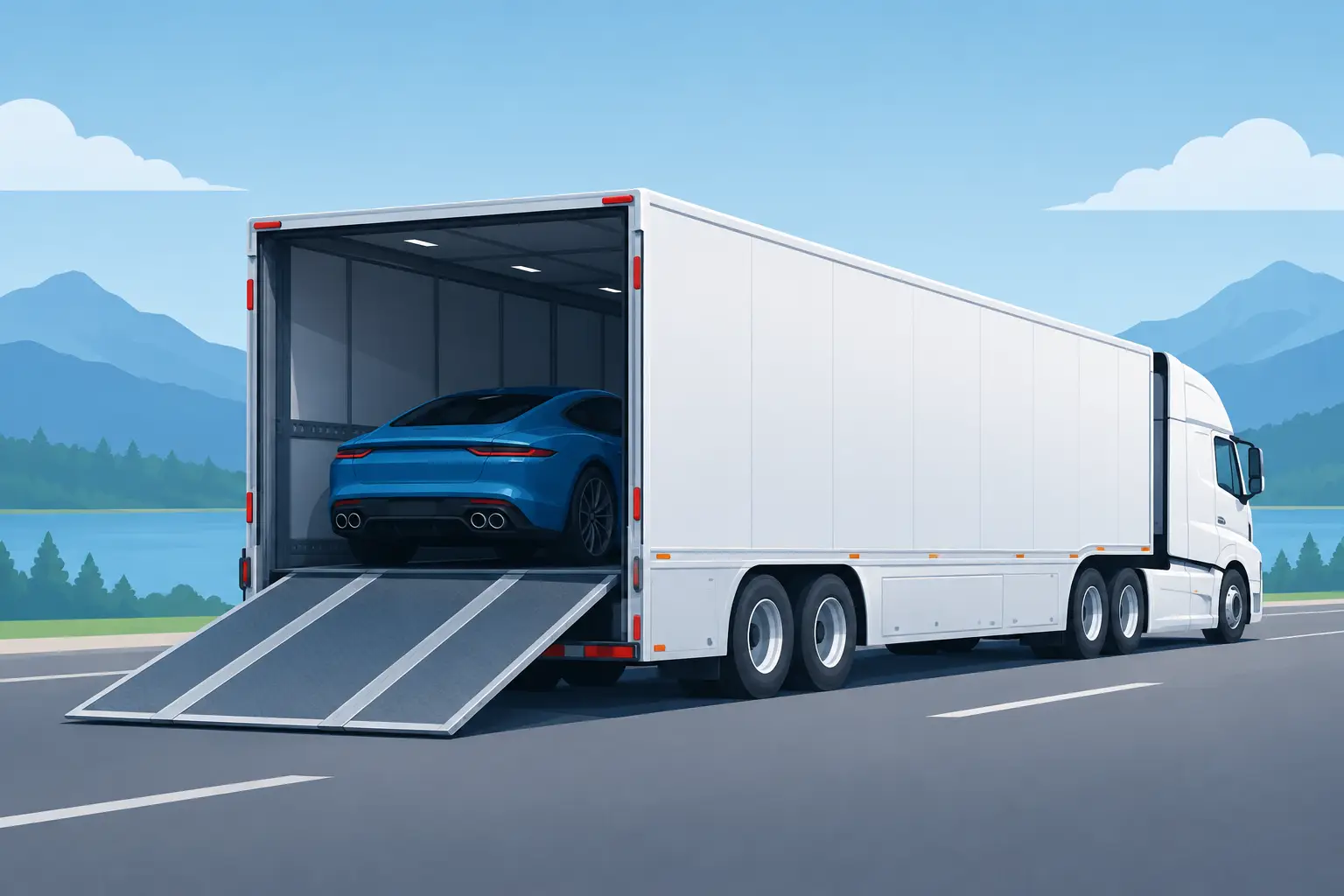
A prestige vehicle does not become less valuable simply because it is stationary. Whether it is a newly purchased classic, a performance car with low ground clearance, an accident-damaged vehicle or a collection car heading abroad, the transport method matters. This guide to enclosed vehicle transport explains what to expect, when it is the right choice and how to arrange a move without leaving key details to chance.
What enclosed vehicle transport provides
Enclosed vehicle transport means the vehicle travels inside a covered transporter rather than exposed on an open recovery lorry. The enclosed body offers protection from weather, road spray, dirt and unwanted attention during the journey. For owners of prestige, classic and specialist vehicles, that additional protection can be as valuable as the transport itself.
It is not only about appearance. Covered transport provides a more controlled environment for vehicles with delicate paintwork, soft tops, low splitters, custom bodywork or high-value interiors. It also offers a more discreet option when moving a vehicle to a dealership, storage facility, event, auction, repairer or private address.
The right service still depends on the vehicle and the job. A short local movement in dry weather may be handled safely on an open carrier, while a long-distance or European move may justify enclosed transport. The priority is matching the equipment, loading method and journey plan to the vehicle's condition and value.
When enclosed transport is the sensible choice
Owners often choose an enclosed transporter for vehicles that need more than routine collection and delivery. Prestige and supercars are obvious examples, particularly where ground clearance, wide bodywork or sensitive finishes demand careful handling. Classic cars and restored vehicles also benefit, as do race cars, show vehicles and cars that have recently received paint protection or detailing work.
It is equally useful for vehicles that are not currently roadworthy. Following an accident or mechanical failure, a vehicle may need collecting from a difficult location before being delivered to a repairer or placed into secure storage. If it cannot be driven, the transporter must have the right winching equipment, access angle and load restraint plan. Covering the vehicle is only one part of doing that job properly.
Longer journeys create more exposure to poor weather, motorway debris and public visibility. For UK-wide transport and European movements, the added protection and discretion of an enclosed service can offer welcome reassurance. It is particularly relevant where collection and delivery dates need to be planned around a sale, registration, event or workshop booking.
The loading process matters as much as the trailer
A covered trailer does not automatically guarantee safe transport. The quality of the loading process determines whether a low, valuable or non-running car is moved without avoidable risk.
Before collection, a competent operator should establish the make, model, condition, dimensions and whether the vehicle starts, steers, rolls and brakes. Ground clearance is essential information. A standard car may load easily, while a lowered vehicle, supercar or damaged car can need ramps, extensions, careful winching and a slower approach.
The vehicle should be secured using appropriate wheel restraints rather than relying on methods that could place unnecessary stress on suspension, steering or bodywork. Once loaded, the transporter should be checked before departure and at sensible points on longer runs. Drivers should also consider collection and delivery access. A narrow residential road, low bridge, steep drive or busy dealership forecourt can change the practical plan.
For a non-runner, be clear about the fault or damage. Mention locked wheels, a missing key, flat tyres, accident damage, an inoperative handbrake or parts that sit lower than usual. This is not a reason to decline the job. It gives the transport team the information needed to bring suitable equipment and avoid delays at collection.
Preparing your vehicle for collection
Good preparation makes handover quicker and protects both parties. Remove personal belongings and loose items from the cabin, boot and door pockets. Anything left inside can move during transport, and valuable items should not be left in the vehicle.
If the car is operational, leave enough fuel for loading and unloading but avoid a full tank where possible. Check that the battery is charged, the tyres are inflated and any alarm or tracker arrangements are understood. Provide all keys required for access, including locking wheel nut keys where relevant.
Take clear, time-stamped photographs before collection. Photograph each side of the vehicle, wheels, glass, roof, interior and any existing damage. A professional collection should include a condition check, but your own record is sensible for any high-value movement.
Tell the transporter about practical details in advance: collection postcode, delivery postcode, contact names, opening hours, site restrictions and the exact vehicle status. If a dealership or workshop has a booking slot, share it. If the vehicle needs temporary secure storage between collection and delivery, arrange that from the outset rather than treating it as an afterthought.
Choosing a provider for enclosed vehicle transport
Price matters, but it should not be the only decision point. The cheapest quote may not include the equipment, insurance arrangements, timing flexibility or careful handling that your vehicle requires. Ask how the vehicle will be loaded, secured and protected, especially if it is low, modified, damaged or non-running.
You should also confirm whether the provider can manage the full journey. A recovery operator may collect a broken-down car but not offer secure onward transport. A standard carrier may move a working vehicle but not be equipped for accident recovery. For a prestige vehicle, it is useful to work with a transport partner that understands both urgent recovery and planned logistics.
Check the proposed collection window, delivery process and communication arrangements. A planned move should have clear contact points, while an urgent breakdown needs a provider that can respond without creating confusion. For cross-border journeys, confirm what documentation, vehicle access and timings will be needed before the vehicle is collected.
MHJ Prestige Transport supports planned specialist movements alongside 24/7 recovery, accident logistics and short-term secure storage. That combination can be particularly helpful when a vehicle's situation changes between collection and final delivery.
UK and European movements need more planning
A move across the UK is usually straightforward when the vehicle is ready and access is clear. European transport requires a little more preparation. Collection and delivery dates may be affected by ferry or tunnel schedules, driving hours, customs requirements where applicable, and handover availability at either end.
The paperwork required depends on the journey and the reason for transport. Have the registration details, ownership or authority to move the vehicle, and destination contact information available. If the vehicle is being moved for repair, sale, relocation or an event, make the purpose clear. A specialist provider can advise what information is needed for the planned movement, but it is best to deal with this before collection day.
Do not assume that every location can take a large enclosed transporter directly outside. City-centre addresses, rural lanes, flat developments and secured compounds can all require a nearby handover point. Agreeing this in advance prevents last-minute delays and keeps the vehicle's time at the roadside to a minimum.
Questions worth asking before you book
Ask whether the vehicle will travel in a fully enclosed unit and whether it will be moved directly or form part of a scheduled route. Neither option is automatically wrong, but it affects timing, handling and cost. Direct transport is often preferable when dates are fixed or the vehicle is especially sensitive, while a planned route may suit a flexible collection.
Confirm the loading approach for your specific vehicle, the security arrangements while in transit, and what happens if delivery cannot proceed as planned. If storage may be needed, ask where it will be kept and how the onward movement will be organised. Clear answers are a good sign that the provider has considered the operation, not simply the journey distance.
Finally, give accurate information. A vehicle described as running when it has locked wheels or significant front-end damage can leave the transporter without the necessary equipment. An honest description allows the right vehicle, driver and loading plan to be allocated from the start.
A well-planned enclosed move should feel controlled from the first call to final handover. Share the condition, access and timing requirements early, and the transport team can focus on what matters most: collecting your vehicle safely and delivering it ready for its next destination.