
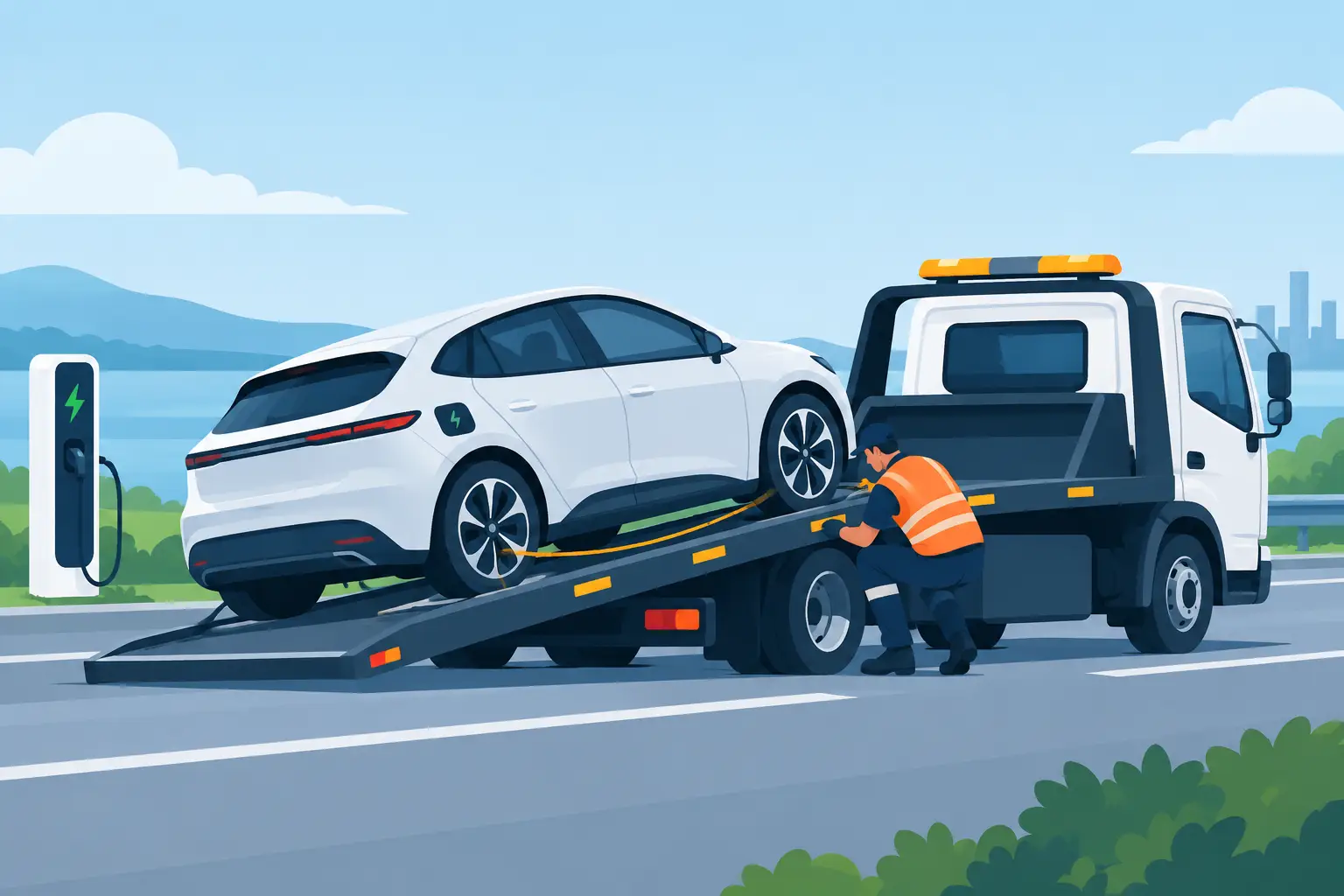
An EV that will not select drive, has lost power on the motorway or has been involved in a collision needs more than a standard tow. Electric vehicle recovery must protect the vehicle, its high-voltage system and everyone at the roadside. The right response is calm, informed and properly equipped from the first call through to delivery or secure storage.
Why electric vehicle recovery is different
Electric vehicles are often heavier than comparable petrol or diesel models because of the traction battery. Their battery packs are usually positioned low in the floor, where they contribute to handling but can be vulnerable to impact from road debris, kerbs or collision damage. A recovery operator needs to account for vehicle weight, ground clearance, wheel position and the manufacturer’s recovery instructions before loading begins.
The biggest difference is the high-voltage system. Bright orange cables and components should never be handled by anyone without the appropriate training. A damaged EV may also have risks that are not immediately obvious, including battery casing damage, coolant loss, warning messages or delayed heating after an impact. This does not mean every electric car involved in a minor incident is unsafe to move. It means the vehicle needs a considered assessment rather than assumptions.
Flatbed transport is generally the most controlled option, particularly where the vehicle cannot be driven, has accident damage or has an unknown fault. It keeps the driven wheels off the road and avoids the risk of damage that can arise when an EV is towed incorrectly. Some manufacturers permit limited towing in specific circumstances, but their guidance varies by model. A recovery decision should always follow the vehicle manufacturer’s instructions.
When to arrange specialist EV recovery
A low battery is not always a recovery job. If the vehicle can be charged safely where it is, roadside charging or a planned visit to a charge point may be the practical answer. However, recovery is usually the better option when the car cannot be safely moved or when charging will not resolve the problem.
Common situations include a complete loss of drive, a warning indicating an electrical or battery-system fault, a collision involving the underside of the vehicle, tyre or suspension damage, key or charging-port issues, and a flat 12-volt battery that prevents the car from powering up. EVs still use a conventional 12-volt battery for many essential systems. When it fails, the vehicle may appear completely unresponsive even when the traction battery has plenty of charge remaining.
Following an accident, tell the recovery provider if there has been any smoke, heat, unusual smell, visible fluid, warning lights, fire service attendance or damage underneath the car. This information allows the operator to plan the collection correctly and determine whether the vehicle requires additional precautions or a suitable storage location.
What to do while waiting at the roadside
Put personal safety first. Move yourself and passengers away from live traffic where it is safe to do so, use hazard warning lights, and follow normal motorway or roadside safety advice. Do not attempt to inspect the battery pack beneath the car, interfere with orange cabling or continue driving a vehicle that has suffered a significant underside impact.
If the vehicle is safe, switch it off, take the key or key card with you and avoid repeatedly trying to restart it. Repeated attempts may not solve an electrical fault and can complicate the initial assessment. If the vehicle is charging when a fault occurs, only disconnect it if this can be done normally and safely. Do not handle damaged charging equipment.
Information that helps recovery happen faster
A precise first call saves time, especially on busy roads or when a prestige EV requires carefully planned handling. The operator will need your location, destination and a clear description of the vehicle’s condition. If possible, have the registration number, make, model and any dashboard warning messages ready.
It also helps to confirm whether the vehicle rolls freely, whether it is in a car park or multi-storey, and whether access is restricted by height, width or barriers. A vehicle parked in an underground bay, for example, may need a different recovery approach to one stopped on a hard shoulder.
For accident recovery, explain where the damage is located and whether airbags have deployed. Photographs can be useful where it is safe and appropriate to take them, but they should never delay getting clear of a dangerous road position. Clear information enables the correct vehicle, loading equipment and crew to be allocated from the outset.
Loading an electric or prestige vehicle with care
Careful loading is not simply about appearance. It prevents further damage to bodywork, wheels, tyres and underfloor protection while keeping the vehicle stable in transit. This matters with every car, but it is particularly relevant for low, heavy and high-value EVs.
The loading method depends on the condition of the vehicle. A car that can be driven carefully onto a transporter may be straightforward, while a non-running vehicle may need skates, wheel dollies, a winch or other suitable equipment. The recovery team should avoid forcing locked wheels, dragging the vehicle or using unsuitable attachment points.
Prestige models can introduce further considerations. Low front splitters, active suspension, large alloy wheels and limited towing-eye access all affect how a vehicle is moved. A suitable transporter and an experienced operator reduce the chance of additional damage at a point when the owner, dealer or insurer already has enough to manage.
Before transport, the vehicle should be secured correctly and checked for loose parts, visible damage and any fluids. The driver should also record the collection condition where appropriate. This creates clarity for the customer and supports a controlled handover at the destination.
Battery damage and post-accident storage
Not every accident-damaged EV needs specialist isolation or extended monitoring. The response depends on the type and severity of damage, the vehicle manufacturer’s guidance and advice from emergency services or qualified repair professionals. However, a vehicle with suspected traction-battery damage should not be treated as a routine repairable car and left wherever space happens to be available.
Secure storage can give owners, insurers and repairers time to make the right next decision. A suitable holding area should allow the vehicle to remain away from unnecessary risk while the condition is assessed. The recovery provider should communicate clearly about where the car is going, how it will be handled and what information has been passed on.
This is especially valuable after a collision away from home, on a weekend or outside normal workshop hours. Recovery is only the first stage. The practical aim is to move the vehicle into a controlled position so repair, inspection, insurance and onward transport can be arranged properly.
UK and European recovery planning
Longer-distance EV transport requires more planning than a short local collection. The recovery provider must consider collection access, vehicle condition, route, delivery arrangements and whether the car needs to remain secured before onward movement. For European movements, documentation, collection timing and the handover location need to be agreed before the vehicle is loaded.
An EV with a simple mechanical issue may be transported directly to a preferred garage, dealer or home address. A collision-damaged vehicle may instead need secure storage first, followed by collection by an insurer-appointed engineer or repairer. There is no single answer, which is why the initial condition report and recovery plan matter.
For dealers, collectors and owners moving prestige electric vehicles, planned transport offers the same advantage as emergency recovery: the car is handled by people who understand that a high-value vehicle is not just another load. It needs the right equipment, the right securing method and a clear chain of responsibility.
Choose a recovery partner that asks the right questions
The cheapest available tow is not always the right solution for an electric vehicle. Ask whether the provider can recover non-running EVs, use a suitable transporter, manage accident-damaged cars and provide secure storage if the destination cannot take the vehicle immediately. Availability matters too. Breakdowns and collisions rarely wait for office hours.
MHJ Prestige Transport provides 24/7 recovery and specialist vehicle transport for urgent breakdowns, accident situations and planned movements. The priority is straightforward: recover the vehicle safely, protect its condition and get it to the right place without adding uncertainty to an already difficult situation.
If your EV needs collection, share the vehicle model, its location, the fault or damage and where it needs to go. Those few details help turn a stressful roadside problem into a controlled recovery plan.