A warning light, a flat tyre or a vehicle that simply will not restart can turn a routine journey into an urgent recovery job. Does insurance cover roadside towing? Sometimes, but it depends on the type of policy, the add-ons you selected and the reason your vehicle needs moving.
For UK motorists, the key distinction is between motor insurance and breakdown cover. Comprehensive insurance does not automatically mean you can call for a tow after every mechanical fault. Before arranging recovery, check your policy documents or insurer's emergency claims line so you understand what is authorised and what you may need to pay for yourself.
When does insurance cover roadside towing?
Roadside towing may be covered when your vehicle cannot be driven following an insured event, such as a collision, vandalism, theft recovery or fire damage. In these circumstances, your insurer will often arrange recovery to an approved repairer, a place of safety or another agreed destination.
If the vehicle has broken down because of a mechanical or electrical fault, towing is more likely to fall under a separate breakdown policy. This may be included with your insurance, added as an optional extra, supplied through a manufacturer warranty, or held through a bank account or motoring organisation.
The wording matters. One policy may provide roadside assistance only, meaning an operative will attempt a repair at the roadside and tow you to a nearby garage if that fails. Another may include national recovery, onward travel, home start or recovery to a destination of your choice. These are not interchangeable benefits.
Accident recovery is usually handled differently
After an accident, insurers normally want to control the recovery process. They may send an approved recovery operator, direct the vehicle to a nominated repair network, or ask you to use a specific claims number. This protects the insurer from unnecessary costs and gives them a clear record of the vehicle's condition and location.
You can still arrange urgent recovery yourself where safety requires it, particularly if the vehicle is stranded in a dangerous position. Keep all paperwork, take photographs where safe to do so and tell your insurer as soon as possible. They may assess whether the recovery cost is reasonable before reimbursing it.
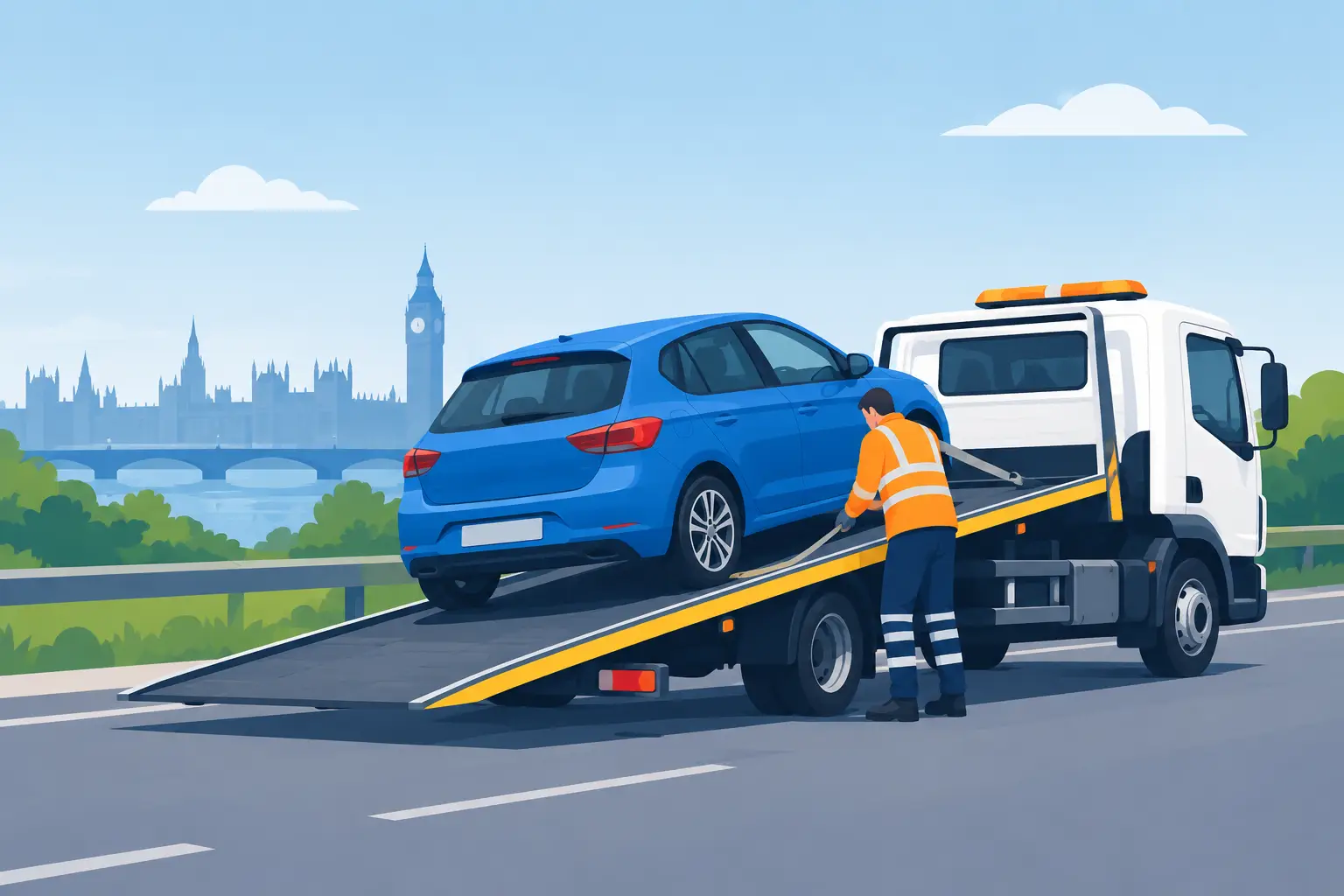
For prestige, performance and classic vehicles, do not assume a standard tow is suitable simply because the insurer has agreed recovery. Low ground clearance, specialist tyres, locked wheels, gearbox limitations and bodywork risk can all affect how the vehicle should be loaded and transported. A flatbed recovery is often the safer choice than towing with wheels on the road.
What breakdown cover typically includes
Breakdown policies vary considerably, but the core service is usually roadside assistance after a fault away from home. The provider will try to get the vehicle moving. If this is not possible, it may be recovered to a local repairer, subject to the policy terms.
More comprehensive levels can include recovery anywhere in the UK, transport for passengers, overnight accommodation in limited circumstances, a replacement vehicle, or home start if the car fails on your driveway. European cover is normally separate or limited by trip duration, so it is worth checking before travelling abroad.
There are also common exclusions. A provider may refuse or limit help where the vehicle is unsafe, overloaded, off-road, uninsured, not maintained in roadworthy condition, or exceeds their weight, length or height limits. Some policies exclude repeated call-outs for the same unresolved fault, while others will not recover a vehicle that has already reached a garage.
If you own a prestige vehicle, check whether the policy refers to a standard recovery vehicle or gives any assurance about specialist handling. The cover may pay for recovery without guaranteeing enclosed transport, low-loader capability or secure onward storage. Those requirements should be discussed when arranging assistance.
Check these details before authorising a tow
The fastest way to avoid a costly misunderstanding is to ask your insurer or breakdown provider direct questions before the vehicle is moved. Confirm whether your membership or policy is active, whether the fault or incident is covered, and whether you must use their nominated recovery company.
Also establish the permitted destination. A provider may cover transport to the nearest suitable repairer but charge extra to take the vehicle home, to your preferred garage or to a dealership further away. If your vehicle needs secure storage after an accident, ask whether storage is authorised and how long it is funded for.
You should also check for excesses, mileage limits and passenger arrangements. Motor insurance claims can carry an excess even where vehicle recovery is included. Breakdown cover may have no excess but may cap the distance travelled or exclude the cost of parts, fuel, tyres and repairs.
Never agree to work you have not authorised. Recovery operators can move a vehicle, but repairs, diagnostic work, storage and onward transport may be separate charges. Ask for a clear explanation of what is being arranged and by whom, particularly if the vehicle is being taken from the scene of an accident.
Will a towing claim affect your no-claims discount?
A breakdown call-out under a standalone breakdown policy will not usually affect your motor insurance no-claims discount. It is a service request rather than a motor claim, although frequent use may be subject to fair-use conditions in the provider's terms.
A recovery following an accident may form part of an insurance claim. Whether it affects your no-claims discount depends on fault, whether costs are recovered from another party and whether you have protected your discount. Your insurer can explain the likely effect, but they may not be able to confirm the final position until liability is resolved.
It is also worth separating the cost of recovery from the cost of repairs. If a minor mechanical problem can be safely fixed at the roadside, that may be simpler than a tow and claim. If the vehicle is unsafe to drive, however, recovery is the right decision. Continuing with a damaged wheel, overheating engine, brake warning or oil-pressure warning can turn a manageable fault into serious damage.
What to do when your vehicle needs recovery
Put safety first. Stop in the safest available location, switch on hazard lights and move passengers away from traffic where it is safe to do so. On a motorway or major road, follow official road safety guidance and avoid attempting repairs in a live lane or on the hard shoulder unless there is no safer option.
Once safe, note your location, registration number, vehicle make and model, the fault or accident details, and whether the wheels can turn freely. Tell the recovery provider about any modifications, low clearance, electric vehicle battery concerns or damage that could affect loading. Accurate information helps ensure the right equipment arrives.
If there has been a collision, take photographs only when it is safe, exchange details with other parties and report the matter to your insurer. Do not leave a damaged vehicle unsecured or agree to an unknown destination without understanding the storage and collection arrangements.
MHJ Prestige Transport provides 24/7 recovery and specialist vehicle transport for motorists who need a controlled response, including careful handling for high-value and damaged vehicles. Where insurance approval is required, having the relevant claim or incident details ready can help recovery arrangements progress without delay.
A policy may cover the tow, part of the tow, or none of it at all. The practical priority is getting the vehicle and its occupants to safety with the right level of care. Check your cover before trouble strikes, keep the emergency number accessible, and choose recovery suited to the vehicle rather than simply the quickest available option.