A breakdown on a live carriageway is not the time to diagnose the warning light or search the boot for tools. The best roadside safety steps UK drivers can take are simple: protect people first, make the vehicle as visible as possible, and arrange professional recovery without putting yourself back in danger.
Whether you are driving a family car, a work vehicle or a prestige vehicle, the priority is the same. Traffic can approach quickly, visibility can change without warning and a vehicle that seemed safe at the roadside can become exposed in seconds.
Stop only where it is safe to do so
If you notice a mechanical problem, a puncture, smoke, loss of power or an unfamiliar warning light, reduce speed steadily. Avoid sharp braking or sudden lane changes. Use your indicators early and move towards a safe stopping place if the vehicle remains controllable.
On ordinary roads, look for a lay-by, car park, petrol station or a wide, safe verge away from bends and junctions. Do not stop just beyond a blind bend, on the brow of a hill or in a narrow stretch where passing traffic has little room. If you can reach a safer location at low speed without causing further risk, do so.
On a motorway, the safest option is generally to leave at the next junction or reach a motorway service area. If that is not possible, use an emergency area where available. A hard shoulder should be used only when you have no safer option. Smart motorways require particular care because some lanes may be live traffic lanes even where there is no hard shoulder.
Make the vehicle visible, then get safe
Once stopped, switch on your hazard warning lights. At night, in poor weather or where visibility is reduced, use sidelights as appropriate. Keep the wheels turned away from live traffic if you are on a verge or hard shoulder, and apply the handbrake.
The next decision depends on where you have stopped. On a motorway hard shoulder or in an emergency area, leave the vehicle by the left-hand doors where it is safe to do so. Move behind the barrier and well away from the carriageway. Take passengers with you, including children, but do not allow anyone to wait between the vehicle and traffic.
If you are unable to leave the vehicle safely - for example, you have stopped in a live lane, traffic is passing closely, or there is no safe route to a barrier - stay inside with seat belts fastened. Put on hazard lights and call 999. This is particularly relevant on smart motorways. Do not attempt to cross lanes, walk to an emergency area or place a warning triangle in a live traffic environment.
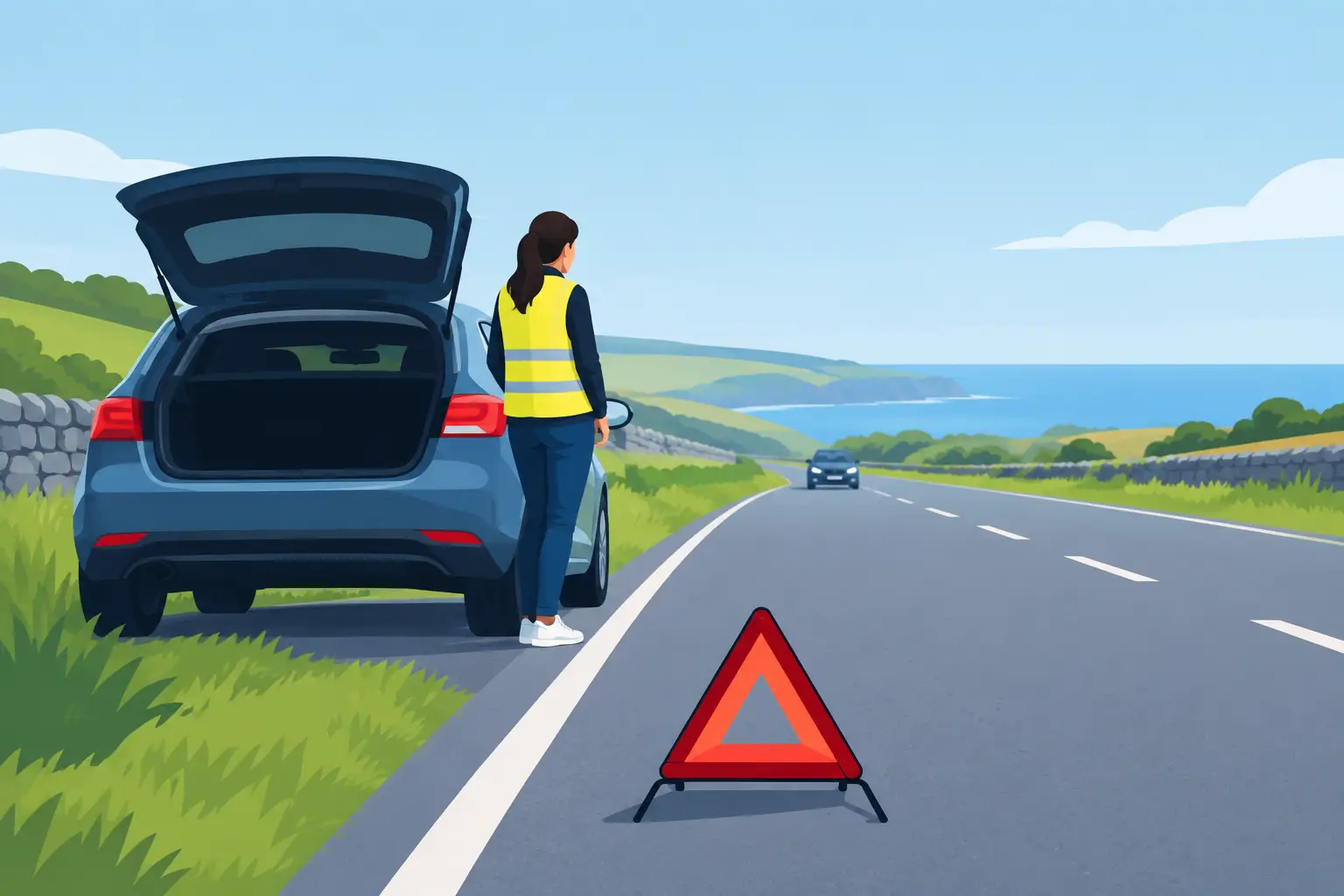
A warning triangle can be useful on some lower-speed roads where it can be placed safely and well before the vehicle. It should never be used on a motorway. Your safety is worth more than any attempt to provide an extra warning to approaching drivers.
If there is smoke, fire or fuel leaking
Move everyone away from the vehicle immediately and keep clear of traffic. Do not open the bonnet if there are signs of fire, as additional oxygen can intensify flames. Call 999 and give the operator clear details of the road, direction of travel, nearest marker post or landmark, and the nature of the danger.
If the vehicle is electric or hybrid, treat smoke, heat or damage to the battery area as an urgent situation. Keep a safe distance and tell emergency services that the vehicle is electric or hybrid.
Call for help with the right information
Once you are in a safe position, contact a recovery provider, breakdown service, insurer or emergency service as appropriate. A fast response begins with accurate information, so avoid vague descriptions such as “near Birmingham” or “on the M6 somewhere”.
Give the road number, carriageway direction, nearest junction, emergency area reference or marker-post location. On motorways, emergency roadside telephones can help responders identify your exact position. If one is safely accessible, use it rather than relying only on a mobile phone.
Explain what has happened and whether the vehicle is driveable. Mention tyre damage, loss of power, collision damage, warning messages, fuel leaks, locked wheels or whether the vehicle is low, modified or a prestige model requiring careful loading. The recovery operator also needs to know how many people are with you and whether anyone has been injured.
For accident recovery, take photographs only if you can do so from a safe place. Exchange details with other drivers when conditions allow, but do not stand in the carriageway to inspect damage. If the road is blocked, debris is present or anyone is hurt, contact the emergency services first.
Do not attempt roadside repairs in exposed places
A flat tyre, loose undertray or overheating engine may appear manageable. The location changes the answer. Replacing a wheel in a quiet car park is different from working beside fast-moving traffic, in darkness or on a narrow rural road.
Do not attempt repairs on a motorway hard shoulder or in a live lane. The same applies to checking underneath the vehicle, topping up fluids or trying to push it out of danger. A recovery professional has the equipment and positioning knowledge to manage the situation with less risk.
For high-value vehicles, avoid improvised towing or allowing an unsuitable vehicle to pull yours. Incorrect recovery points, poor loading angles or unsecured transport can cause damage that is more expensive than the original fault. Tell the recovery provider the make, model and condition of the vehicle so the right equipment can be sent.
Best roadside safety steps UK drivers should prepare in advance
Good roadside decisions are easier when the essentials are already in the car. Keep your mobile phone charged where possible and store the contact details for your recovery provider and insurer. Check that any spare wheel, inflation kit or locking wheel-nut key is present, even if you do not plan to carry out a roadside repair yourself.
It is also sensible to carry a high-visibility vest, torch, warm layer, drinking water and a basic first-aid kit. In winter or on longer journeys, add a blanket and charging cable. These items will not solve a breakdown, but they can make a wait safer and more manageable.
Before travelling, particularly with a prestige, classic or recently purchased vehicle, check fuel level, tyre condition, coolant warnings and battery health. A quick check does not prevent every fault, but it can reduce avoidable stops. If a warning appears before setting off, deal with it before joining a motorway or beginning a long journey.
Keep control after recovery arrives
When recovery arrives, confirm the provider and follow the operator’s instructions. Stay clear while the vehicle is being loaded unless asked to assist. Ask where the vehicle is going, whether it will be stored securely if repairs cannot begin immediately, and how you will receive updates.
For accident-damaged or prestige vehicles, photographs taken at collection can provide a useful condition record. Remove valuables and personal documents if it is safe to do so, while keeping your keys and insurance information available for the recovery team.
The right response at the roadside is rarely complicated: get clear of danger, be visible, share an exact location and let properly equipped professionals handle the vehicle. MHJ Prestige Transport provides responsive recovery and careful onward transport when your vehicle needs more than a quick roadside fix.